



Having a personal loan can be useful when you need to cover a major expense, consolidate debt, pay for an emergency, or handle an unexpected financial need. If you already have a personal loan, you may wonder, how many personal loans can you have at once? The answer depends on the lenders you apply with, your income, existing debt, credit history, and ability to manage another monthly payment.
In the United States, there is no single nationwide number that applies to every borrower. Whether you can have two, three, or more personal loans depends largely on the lenders you use, their individual policies, your income, existing debt, credit history, and ability to afford another monthly payment.
Having multiple personal loans is possible, but approval is not guaranteed. A lender will generally evaluate your overall financial situation rather than simply counting how many personal loans you already have.
Before applying for another loan, it is important to understand how multiple loans can affect your budget, debt-to-income ratio (DTI), credit profile, and future borrowing ability.
Quick Answer
Yes, you can have more than one personal loan at the same time.
There is no universal personal-loan limit that automatically applies to every borrower in the United States. Instead, individual lenders set their own eligibility and underwriting requirements.
A lender may consider factors such as:
- Credit score and credit history
- Monthly income
- Existing debt
- Debt-to-income ratio (DTI)
- Payment history
- Employment or income stability
- Loan amount requested
- Existing loans with that lender
- Recent credit applications
- The lender’s own lending policies
For example, someone with a strong credit history, reliable income, manageable debt, and a good record of on-time payments may have an easier time qualifying for another personal loan than someone whose finances are already stretched.
The important point is that there is no guaranteed number of personal loans you can have. Your ability to qualify depends on both the lender and your financial situation.
What Is a Personal Loan?
A personal loan is money borrowed from a bank, credit union, or online lender that is generally repaid through scheduled payments over a fixed period.
Many personal loans are unsecured, meaning they do not require collateral such as a home or vehicle. However, loan terms vary by lender, so borrowers should review the interest rate, annual percentage rate (APR), fees, repayment period, and other terms before accepting an offer.
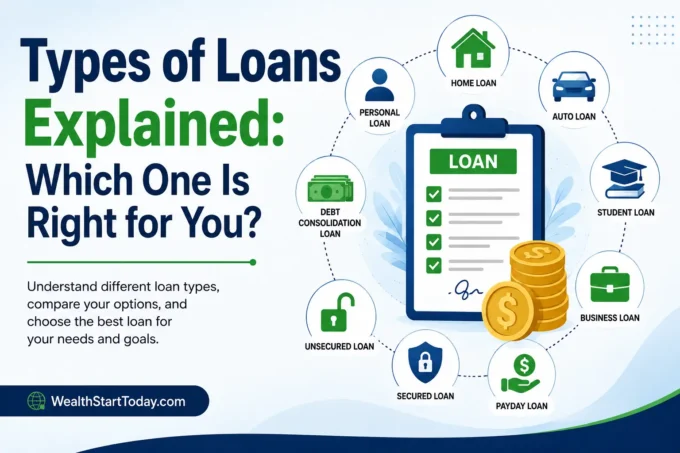
Personal loans are one of several types of loans available to consumers. Unlike a mortgage or car loan, most personal loans are unsecured, which means you don’t have to put up collateral like your home or vehicle to qualify.
People commonly use personal loans for expenses such as:
- Debt consolidation
- Home improvement
- Emergency expenses
- Medical bills
- Moving costs
- Large purchases
- Wedding expenses
- Other major personal expenses
Because personal loans often have fixed payments, borrowers may find them easier to budget for than some forms of revolving credit. However, taking out another loan still increases the amount of debt that must be repaid.
Is There a Limit on Multiple Personal Loans?
There is no universal number that guarantees a borrower can have a certain number of personal loans.
You may be able to have:
- Two personal loans
- Three personal loans
- Personal loans from different lenders
- Multiple loans over time as older balances are paid off
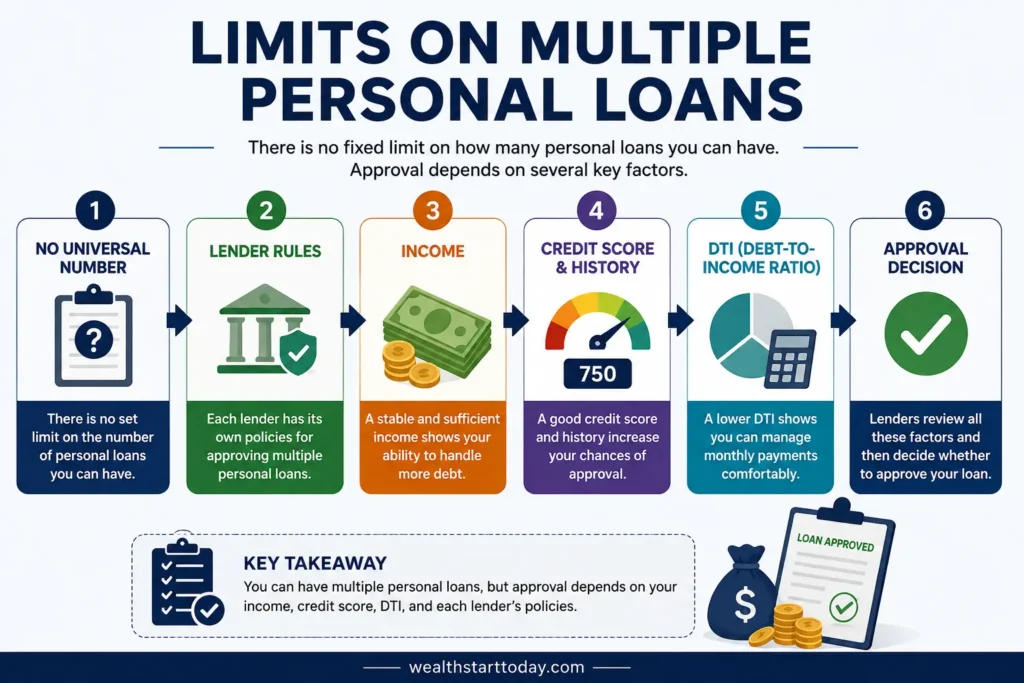
However, whether you can actually obtain another loan depends on the lender’s rules and your ability to repay the additional debt.
Some lenders may restrict how many loans a borrower can have with them at one time. Others may consider another application if the borrower meets their requirements.
This means two people with similar incomes could receive different decisions because lenders may use different underwriting standards.
Can You Have Two Personal Loans at the Same Time?
Yes. A borrower may be able to have two personal loans at the same time if both lenders approve the applications and the borrower meets their requirements.
For example, imagine Sarah earns $6,500 per month and already has a personal loan with a $280 monthly payment. She wants another loan to finance an essential home renovation.
The second lender may review her:
- Credit history
- Income
- Existing debt
- DTI ratio
- Payment history
- Employment or income stability
- Requested loan amount
If Sarah has sufficient income and manageable debt, she may qualify. However, another borrower with the same income could be denied if that person has significant existing debt or a history of missed payments.
The number of loans alone does not determine approval.
Is There a Practical Limit on Multiple Personal Loans?
Although there may not be one universal legal number, there can be a practical limit based on your finances.
Every additional personal loan can increase your monthly debt obligations. As your debt payments increase, your DTI can also rise, potentially making it harder to qualify for additional credit.
Your practical limit may therefore be reached before you reach any particular number of loans.
For example, someone earning $5,000 per month might comfortably manage one additional loan, while another borrower with the same income but significantly higher mortgage, auto, credit card, and student-loan payments may have little room for additional debt.
The better question is not simply:
“How many personal loans can I get?”
It is:
“How much additional debt can I reasonably afford without putting my finances under unnecessary pressure?”
Can You Have Personal Loans From Different Lenders?
Yes, it is possible to have personal loans from different lenders.
For example, you could have:
- One personal loan from a bank
- Another from a credit union
- A separate personal loan from an online lender
Each lender makes its own lending decision. When you apply for additional credit, the lender may review your credit report and financial information to determine whether you can afford the new obligation.
Having loans from different lenders does not automatically make borrowing a bad idea. However, managing several loans can make your monthly finances more complicated.
Before accepting another loan, add all of your monthly debt payments together and consider whether the new payment fits comfortably into your budget.
Factors Lenders Consider Before Approving Multiple Personal Loans
Having an existing personal loan does not automatically prevent you from qualifying for another one. However, lenders generally want to determine whether you can repay the new debt.
Here are some of the most important factors they may consider.
1. Credit Score and Credit History
Your credit score and credit history can play an important role in a lender’s decision.
A credit score can help lenders assess your past credit management, but lenders do not all use the same requirements. A higher score may improve your chances of receiving favorable terms, while a lower score may make approval more difficult or result in less favorable pricing.
Your credit history also matters.
Lenders may look at:
- Previous loan payments
- Credit card payment history
- Defaults
- Collections
- Length of credit history
- Existing credit accounts
There is no single credit score that guarantees approval for a second personal loan.
2. Debt-to-Income Ratio (DTI)
Your debt-to-income ratio compares your monthly debt payments with your gross monthly income.
The basic calculation is:
DTI = Total Monthly Debt Payments ÷ Gross Monthly Income × 100
For example, suppose you earn $6,000 per month before taxes and have these monthly debt payments:
- Mortgage: $1,200
- Auto loan: $350
- Credit cards: $200
- Personal loan: $250
Your total monthly debt payments are $2,000.
Your DTI would be:
$2,000 ÷ $6,000 × 100 = 33.3%
So your DTI is approximately 33%.
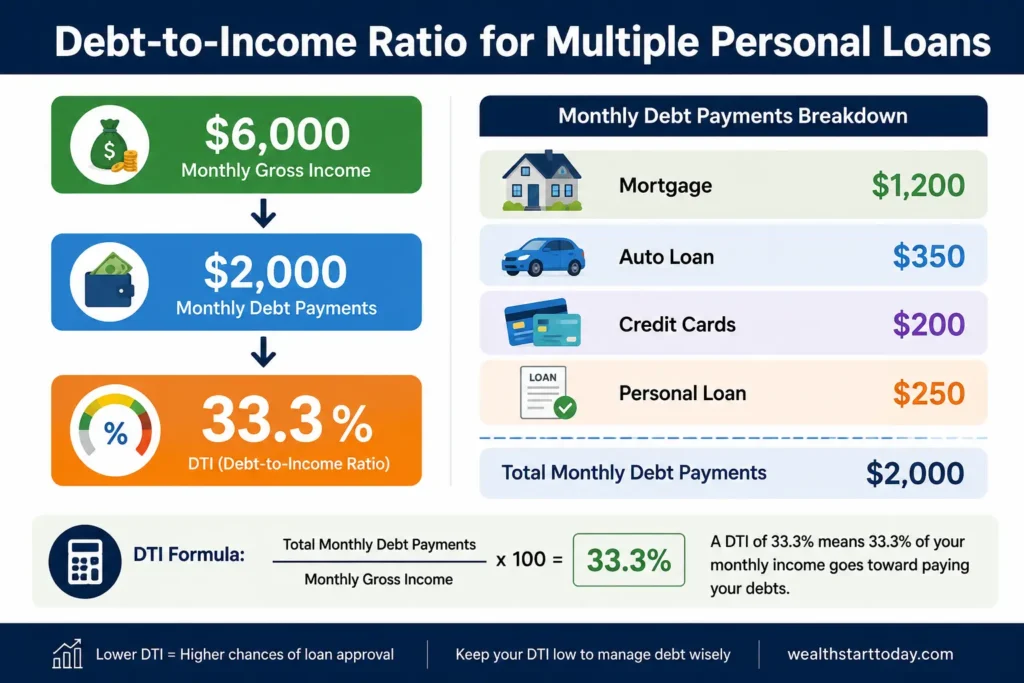
The CFPB explains that DTI is one way lenders measure a borrower’s ability to manage monthly debt payments, and different lenders and loan products can use different DTI limits.
That means there is no universal DTI percentage that guarantees approval for every personal loan.
Generally, a lower DTI can indicate that more of your income remains available after existing debt obligations.
3. Monthly Income
Lenders may also consider how much money you earn and whether your income appears sufficient to support the requested loan.
Depending on the lender and your situation, income may come from sources such as:
- Full-time employment
- Part-time employment
- Self-employment
- Retirement income
- Rental income
- Other verifiable income sources
The lender may ask for documentation such as pay stubs, bank statements, tax returns, or other records.
Having a high income does not automatically guarantee approval. What matters is how your income compares with your existing obligations and the new payment you are requesting.
4. Employment and Income Stability
Lenders may consider the stability and reliability of your income.
Someone with a consistent income history may present a different risk profile from someone whose income fluctuates significantly.
Self-employed borrowers can also qualify for personal loans, but some lenders may request additional documentation to verify income.
Requirements vary, so borrowers should check the lender’s documentation requirements before applying.
5. Existing Debt Obligations
Lenders may consider your overall debt rather than focusing only on personal loans.
Your existing obligations can include:
- Mortgage payments
- Auto loans
- Credit card debt
- Student loans
- Personal loans
- Other installment debt
- Other qualifying financial obligations
A borrower with several existing monthly payments may have less room in their budget for another loan.
6. Payment History
Your payment history can provide lenders with information about how you have managed previous credit obligations.
A consistent record of on-time payments can demonstrate responsible credit management.
Recent late payments, defaults, or accounts in collections may make it harder to qualify for new credit or may result in less favorable terms.
Before applying for another personal loan, review your credit reports and make sure the information is accurate.
7. Recent Credit Applications
Applying for new credit can result in a hard credit inquiry if the lender checks your credit report as part of the application.
The CFPB explains that hard inquiries can affect credit scores, while soft inquiries do not affect credit scores.
A useful distinction is that shopping around is not always treated the same way for every type of loan. Credit-scoring models have special treatment for certain rate-shopping situations, but borrowers should not assume that multiple personal-loan applications will always be combined into one inquiry.
If a lender offers prequalification using a soft inquiry, that can allow you to review potential options without the same immediate credit-score effect as a hard inquiry. However, you should confirm how the lender checks your credit before proceeding.
Why Some Borrowers Qualify for Multiple Personal Loans
Two borrowers with similar incomes may receive different loan decisions.
That is because lenders can consider a combination of factors, including:
- Credit history
- Income
- Existing debt
- DTI
- Payment history
- Loan amount
- Employment or income stability
- Internal lender policies
For example, a borrower earning $7,000 per month with relatively low existing debt may have more borrowing capacity than someone earning the same amount but already making several thousand dollars in monthly debt payments.
This is why income alone does not determine whether you can qualify for another personal loan.
Benefits of Having Multiple Personal Loans
Taking out multiple personal loans is not automatically beneficial, but there can be situations where an additional loan may serve a legitimate financial need.
1. Financing a Different Necessary Expense
You may already have a personal loan for one purpose and later face another major expense.
Examples could include:
- Essential home repairs
- Unexpected expenses
- Moving costs
- Certain medical expenses
- Other necessary purchases
Before borrowing, compare the cost of the personal loan with other available options.
2. Predictable Monthly Payments
Many personal loans have fixed interest rates and scheduled monthly payments.
This predictability can make budgeting easier because you know the required payment and repayment schedule.
However, adding another fixed payment still increases your overall monthly obligations.
3. Potentially Lower Borrowing Costs
A new personal loan could potentially reduce borrowing costs if it replaces more expensive debt and the new loan has a lower overall cost.
But this should never be assumed.
Compare:
- APR
- Interest rate
- Origination fees
- Other fees
- Monthly payment
- Repayment period
- Total amount repaid
A lower monthly payment does not necessarily mean a cheaper loan if the repayment period is significantly longer.
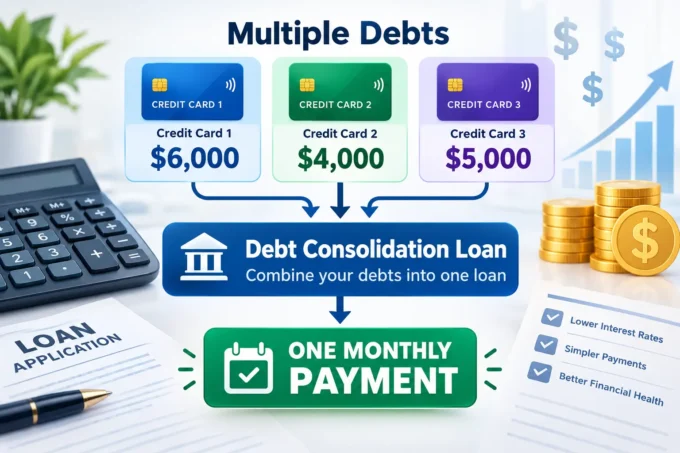
4. Consolidating Existing Debt
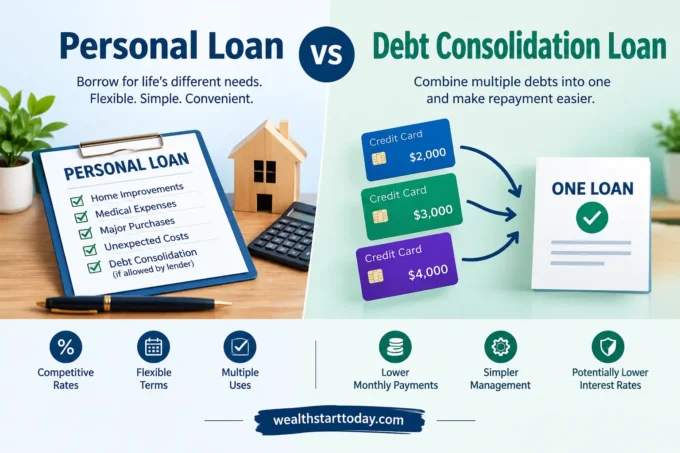
In some circumstances, borrowers use a personal loan to consolidate higher-cost debt.
However, consolidation only makes financial sense when the new arrangement improves the borrower’s overall situation after considering interest, fees, repayment period, and spending habits.
Risks of Having Multiple Personal Loans
The ability to qualify for another loan does not necessarily mean you should take one.
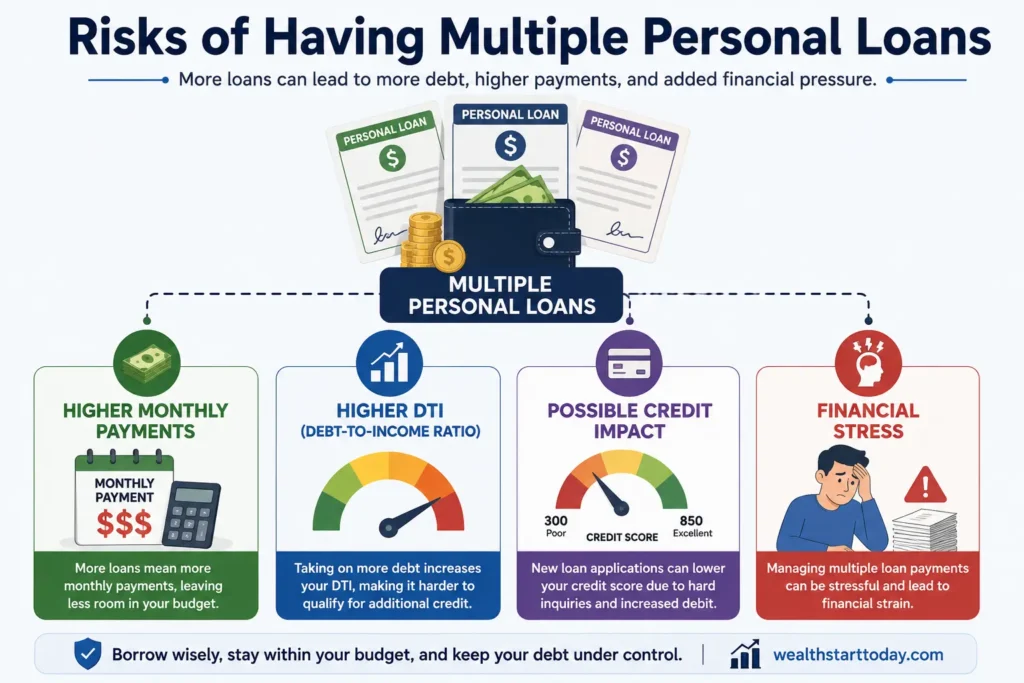
1. Higher Monthly Debt Payments
Every additional loan can create another required monthly payment.
For example:
- Personal Loan #1: $280
- Personal Loan #2: $350
- Auto Loan: $420
- Mortgage: $1,400
These payments total $2,450 per month.
If your income falls or you face an unexpected expense, managing all of those obligations could become difficult.
2. Higher DTI
Taking on another loan can increase your DTI.
A higher DTI may leave less room in your budget and can affect how lenders evaluate future credit applications.
Because lenders use different standards, there is no single DTI percentage that guarantees approval or denial.
3. Possible Credit Score Impact
A new loan application may involve a hard credit inquiry, which can have a temporary effect on your credit score.
Opening new credit can also increase your overall debt.
The bigger concern, however, is what happens if additional borrowing becomes difficult to repay. Missed or late payments can have more serious consequences for your credit and finances.
4. Greater Financial Stress
Managing multiple loan payments can make your finances harder to track.
Different lenders may have different:
- Payment dates
- Interest rates
- Fees
- Loan terms
- Account systems
Consider automatic payments or calendar reminders to help avoid missed due dates.
Does Having Multiple Personal Loans Hurt Your Credit Score?
Not automatically.
Having multiple personal loans does not by itself mean your credit score will fall permanently.
Your credit profile can be affected by several factors, including:
- Hard credit inquiries
- New accounts
- Payment history
- Overall debt
- Length and mix of credit accounts
Making payments on time and managing your debt responsibly can help maintain a healthier credit profile.
On the other hand, repeatedly applying for new credit, taking on debt you cannot afford, or missing payments can create problems.
The CFPB notes that hard inquiries can affect credit scores, while checking your own credit report is a soft inquiry and does not affect your score.
When Does It Make Sense to Apply for Another Personal Loan?
A second personal loan may make sense when you have a legitimate financial need and enough room in your budget to handle the additional payment.
Before applying, consider:
- Is the expense necessary?
- Can I afford the new monthly payment?
- What will my DTI be after taking the loan?
- Have I compared the APR and total borrowing cost?
- Are there lower-cost alternatives?
- Will the new debt improve or worsen my overall financial position?
For example, an essential home repair may justify exploring financing options if you do not have enough savings to cover it.
By contrast, borrowing for a non-essential purchase when your existing debt is already difficult to manage may create unnecessary financial pressure.
What to Check Before Taking a Second Personal Loan
Before submitting an application, take these steps:
Check Your Credit Reports
Review your credit reports for inaccurate information and unresolved issues.
Calculate Your New DTI
Add the proposed loan payment to your existing monthly debt payments and calculate your new DTI.
Compare Total Loan Costs
Do not compare loans based only on monthly payment. Look at APR, fees, repayment period, and total amount repaid.
Check for Prequalification
If available, prequalification may allow you to see potential loan options without immediately triggering a hard inquiry. Confirm the lender’s credit-check process before proceeding.
Review Your Budget
Make sure the new payment leaves enough money for housing, food, utilities, insurance, savings, emergencies, and other necessary expenses.
Consider Alternatives
If another loan is not the best option, explore other ways to solve the financial problem.
Alternatives to Taking Another Personal Loan
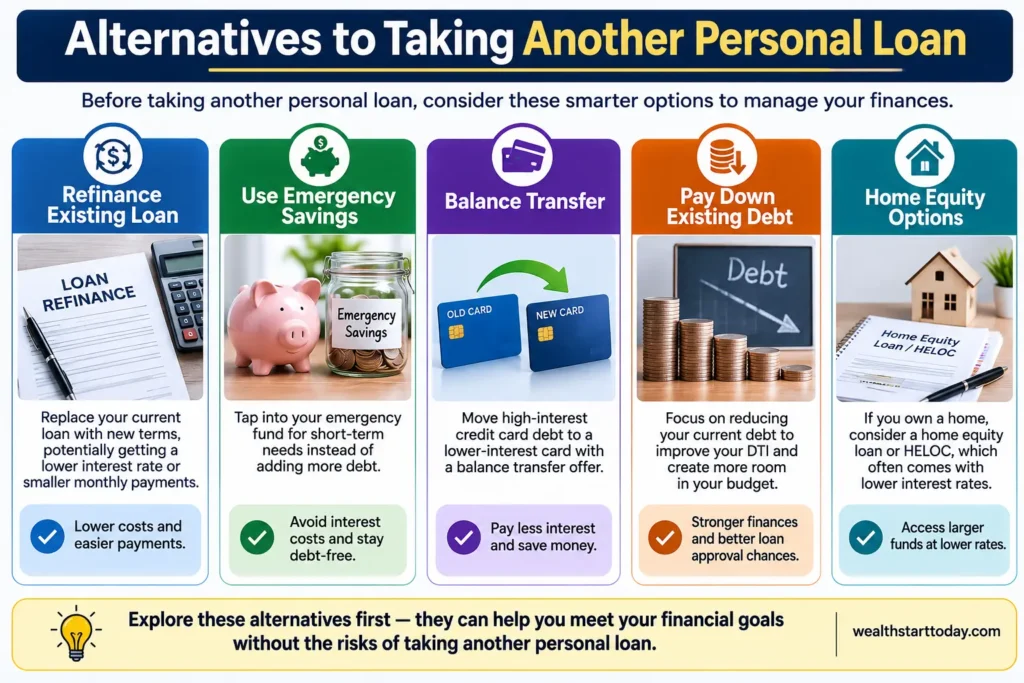
Before taking another personal loan, consider whether another form of financing or a different debt-management strategy could meet your needs.
Refinance an Existing Loan
If your credit or financial situation has improved, you may be able to explore refinancing options. Compare the new loan’s total cost with your existing loan before making a decision.
Ask Your Existing Lender About Options
If you are struggling with payments, contact your lender before missing a payment. Depending on the lender and circumstances, there may be options available.
Use Available Savings
If you have enough savings and using part of it would not leave you without an emergency cushion, paying for an expense with savings could avoid additional interest.
Consider a Balance Transfer
For certain high-interest credit card debt, a balance-transfer card may be worth considering if you qualify and understand the fees, promotional period, and regular APR after the promotional period.
Focus on Paying Down Existing Debt
If your current debt is already putting pressure on your budget, reducing existing balances may be a better strategy than adding another loan.
Consider Home Equity Options Carefully
Homeowners may consider a home equity loan or HELOC for certain expenses. These products use your home as collateral, so failure to repay can put your home at risk.
Frequently Asked Questions
Can You Have Two Personal Loans at the Same Time?
Yes. You may be able to have two personal loans at the same time if the lenders approve you and you meet their requirements.
There is no universal number that guarantees how many personal loans a borrower can have. Approval depends on factors such as income, credit history, existing debt, DTI, and lender policies.
Can You Get Three Personal Loans at Once?
It is possible for a borrower to have three personal loans, but there is no guarantee that a lender will approve another application.
With each additional loan, your total debt and monthly obligations may increase. This can affect your DTI and make additional borrowing more difficult.
Can You Get Personal Loans From Different Lenders?
Yes. A borrower can potentially have personal loans from different banks, credit unions, or online lenders.
Each lender evaluates the application according to its own requirements.
What Credit Score Do You Need for a Second Personal Loan?
There is no single credit score that guarantees approval for a second personal loan.
Lenders can use different credit-score requirements and may also consider income, DTI, payment history, existing debt, and other factors.
A stronger credit profile may improve your chances of qualifying for competitive terms, but your credit score is only one part of the application.
Will Applying for Another Personal Loan Affect My Credit?
It can.
If the lender performs a hard credit inquiry, the inquiry can affect your credit score. The CFPB distinguishes hard inquiries from soft inquiries: hard inquiries can affect scores, while soft inquiries do not.
Ask the lender whether checking your eligibility or prequalifying will involve a soft or hard inquiry.
Can I Use a Second Personal Loan to Pay Off Another Loan?
You may be able to use a new personal loan to pay off existing debt, depending on the lender and loan terms.
However, refinancing or consolidating debt only makes sense if the new arrangement provides a meaningful financial benefit after considering APR, fees, repayment period, and total cost.
Should You Take Another Personal Loan?
Before applying, ask yourself:
- Can I comfortably afford another monthly payment?
- Do I genuinely need the money?
- What will my DTI be after taking the loan?
- Have I compared the total cost?
- Is there a lower-cost alternative?
- Am I taking on debt to solve a temporary problem?
If another loan would leave your budget with little room for emergencies or essential expenses, taking on additional debt may not be the best choice.
Conclusion
If you’re wondering how many personal loans can you have at once, there is no single number that applies to every borrower in the United States. You may be able to have multiple personal loans, but approval depends on the lender’s requirements and your overall financial situation.
Before taking another loan, consider your income, existing debt, credit history, debt-to-income ratio, and whether you can comfortably afford the additional monthly payment. Also compare interest rates, APRs, fees, repayment terms, and total borrowing costs before making a decision.
Having multiple personal loans can be manageable when you borrow responsibly and stay within your budget. However, if another loan would put too much pressure on your finances, paying down existing debt or exploring alternative options may be the better choice.











1 Comment