


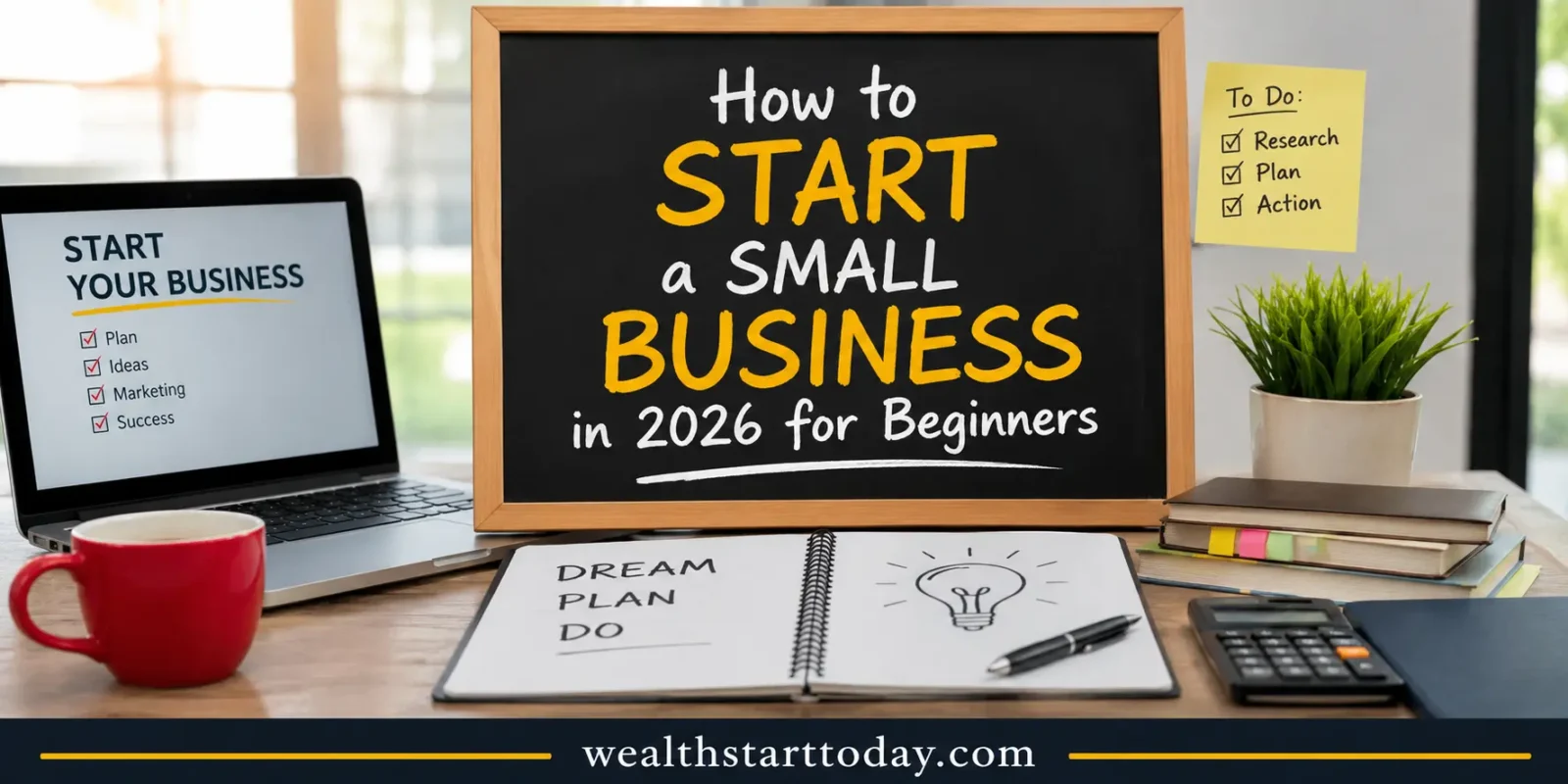
Learning how to start small business ventures has never been more accessible than it is in 2026. More people than ever before are making money from their ideas thanks to digital tools, inexpensive web platforms, and an expanding community of entrepreneurs sharing practical tactics. Whether you wish to start a full-time business or a side gig, understanding how to start small business the right way can save you months of trial and error and thousands of dollars in costly mistakes.
At Wealth Start Today, we believe that anyone with the right roadmap can build a successful business from scratch. This guide breaks down every step of how to start small business operations in 2026, from validating your idea to scaling for long-term growth. You can find more practical business resources in our Business category at wealthstarttoday.com, where we regularly publish guides designed to help new entrepreneurs build real, sustainable wealth.
By the end of this article, you will know exactly how to start small business planning, funding, registration, branding, and marketing — all backed by current 2026 data and trends.
Why 2026 Is a Great Year to Start a Small Business
Before diving into how to start small business steps, it helps to understand why now is such a strong time to take the leap.
Rising Demand for Local and Niche Businesses
In 2026, consumers are actively choosing independent, smaller brands over big ones. Over 60% of consumers say they prefer to purchase from local or niche firms when the price and quality are equivalent, according to recent surveys on small company trends. This shift creates massive opportunities for first-time entrepreneurs learning how to start small business operations in their community or online niche.
Lower Barriers to Entry Through Technology
In 2026, starting expenses have significantly decreased thanks to cloud-based bookkeeping, AI-powered marketing tools, and no-code website builders. Many entrepreneurs are now learning how to start small business ventures with under $1,000 in initial investment, compared to the tens of thousands required just a decade ago.
Remote and Hybrid Work Culture
As remote employment continues to become more common, service-based and digital firms may function with less overhead. This is one of the biggest reasons more people are searching for how to start small business guidance — the flexibility to build something on their own schedule has never been greater.
Step 1: Find a Profitable Small Business Idea
The first real step in how to start small business success is choosing the right idea. Not every passion translates into profit, so this step requires both creativity and research.
Validate Demand Before You Build
Verify that actual people are looking for or discussing your concept by using tools like Google Trends, keyword research platforms, and social media listening. It could be challenging to get regular clients if no one is looking for it.
Solve a Specific Problem
In 2026, the most successful companies are those who focus on finding a precise solution for a target market. “I want to sell eco-friendly candles for stressed working professionals who want a calming evening routine” is a stronger pitch than “I want to sell candles.” ” Specificity makes marketing and how to start small business branding far easier later on.
Popular Small Business Categories in 2026
According to current market data, a few categories—health and wellness coaching, e-commerce and dropshipping, digital marketing agencies, content creation and personal branding, home services (cleaning, landscaping, repair), pet care services, and educational tutoring or online courses—continue to do well.
Step 2: Write a Simple, Realistic Business Plan
Many people skip this step when figuring out how to start small business ventures, but even a one-page plan dramatically increases your odds of success.
Define Your Mission and Target Customer
Put in writing who you are serving and why they care about your business. Later on, this serves as the basis for your advertising, content, and branding.
Outline Your Revenue Model
Choose whether to use commissions, one-time sales, subscriptions, or service fees to generate revenue. A clear revenue model is essential when learning how to start small business finances correctly from day one.
Set 90-Day, 6-Month, and 1-Year Goals
Divide your vision into quantifiable benchmarks. This holds you responsible and provides you with a standard by which to assess the effectiveness of your approach.
Step 3: Choose the Right Business Structure
Understanding legal structure is a critical part of how to start small business setup, since it affects your taxes, liability, and ability to raise funding.
Sole Proprietorship
The most straightforward structure, perfect for independent contractors and side gigs. It doesn’t provide personal liability protection, but it does need very little paperwork.
Limited Liability Company (LLC)
The most common option for small business owners in 2026 is an LLC since it keeps personal and business assets separate while being comparatively easy to operate.
Corporation (S-Corp or C-Corp)
Ideal for companies looking to raise large sums of money or add several shareholders. More paperwork and regulatory procedures are part of this arrangement.
Registering Your Business Name
After deciding on a structure, register your company name with your state or local government and, if you intend to create a website, look into the availability of domain names — an essential step for anyone serious about how to start small business branding online.
Step 4: Handle the Legal and Financial Essentials
Skipping legal basics is one of the most common mistakes new entrepreneurs make when learning how to start small business operations.
Get an EIN (Employer Identification Number)
You may hire staff, open a company bank account, and file taxes independently of your personal finances with an EIN.
Open a Dedicated Business Bank Account
Accounting difficulties and tax hazards result from combining personal and business finances. Your records are kept tidy and professional with a separate account.
Understand Licenses and Permits
To operate lawfully, you could require particular licenses or permits, depending on your industry and area. Before launching, find out what your state, county, and local city require.
Set Up Basic Bookkeeping
Track income, spending, and taxes from the start by using accounting software. Many of the financial difficulties faced by first-year business owners are avoided by this behavior alone.
Step 5: Fund Your Small Business
Funding is often the biggest concern for people researching how to start small business ventures, but 2026 offers more options than ever before.
Bootstrapping
Although it necessitates strict planning and a lean launch strategy, using your own savings gives you complete control.
Small Business Loans and Grants
Small business loans and grants are available from numerous banks, credit unions, and government initiatives, particularly for new business owners in underprivileged areas or in particular industries.
Crowdfunding
You can raise money directly from potential buyers on websites like Kickstarter and Indiegogo while simultaneously confirming that there is a market for your product.
Friends, Family, and Angel Investors
Some entrepreneurs obtain early-stage cash from angel investors or personal networks in exchange for equity or payback terms in order to cover higher launch costs.
Step 6: Build Your Brand and Online Presence
In 2026, your online presence often makes the first impression on potential customers, making this a non-negotiable part of how to start small business growth.
Create a Professional Website
Your online showroom is your website. It should make it obvious what you provide, who it is for, and how clients may use it. Resources like the Business section on Wealth Start Today offer practical templates and strategies for building a credible online presence from day one.
Choose the Right Social Media Platforms
Concentrate on the one or two platforms where your target audience genuinely spends time rather than trying to be everywhere. Quantity is not as important as consistency.
Develop a Consistent Brand Voice
Your website, social media accounts, and marketing materials should all have the same tone, images, and messaging. Over time, this fosters recognition and trust.
Step 7: Market Your Small Business Effectively
Marketing is where many entrepreneurs struggle most after learning the basics of how to start small business setup. A strong launch strategy in 2026 typically blends several channels.
Search Engine Optimization (SEO)
Publishing helpful, keyword-optimized content — like guides on how to start small business topics relevant to your niche — helps you attract organic traffic without paying for every customer.
Social Media Marketing
In 2026, short-form video content is still quite popular, which makes platforms like TikTok and Instagram Reels useful for naturally expanding your audience.
Email Marketing
In 2026, short-form video content is still quite popular, which makes platforms like TikTok and Instagram Reels useful for naturally expanding your audience.
Paid Advertising
Once you have validated your offer, paid ads on social media or search engines can accelerate growth, but should be tested carefully with small budgets first.
Step 8: Track Performance and Optimize
Once your business is live, the work of how to start small business success shifts toward consistent optimization.
Monitor Key Metrics
To find out what’s working, monitor revenue, client acquisition costs, profit margins, and customer retention rates on a monthly basis.
Gather Customer Feedback
One of the most important tools for enhancing your product, service, and overall experience is direct consumer feedback.
Reinvest in What Works
As you identify your most profitable channels and offers, reinvest time and budget there rather than spreading resources too thin.
Common Mistakes to Avoid When Starting a Small Business
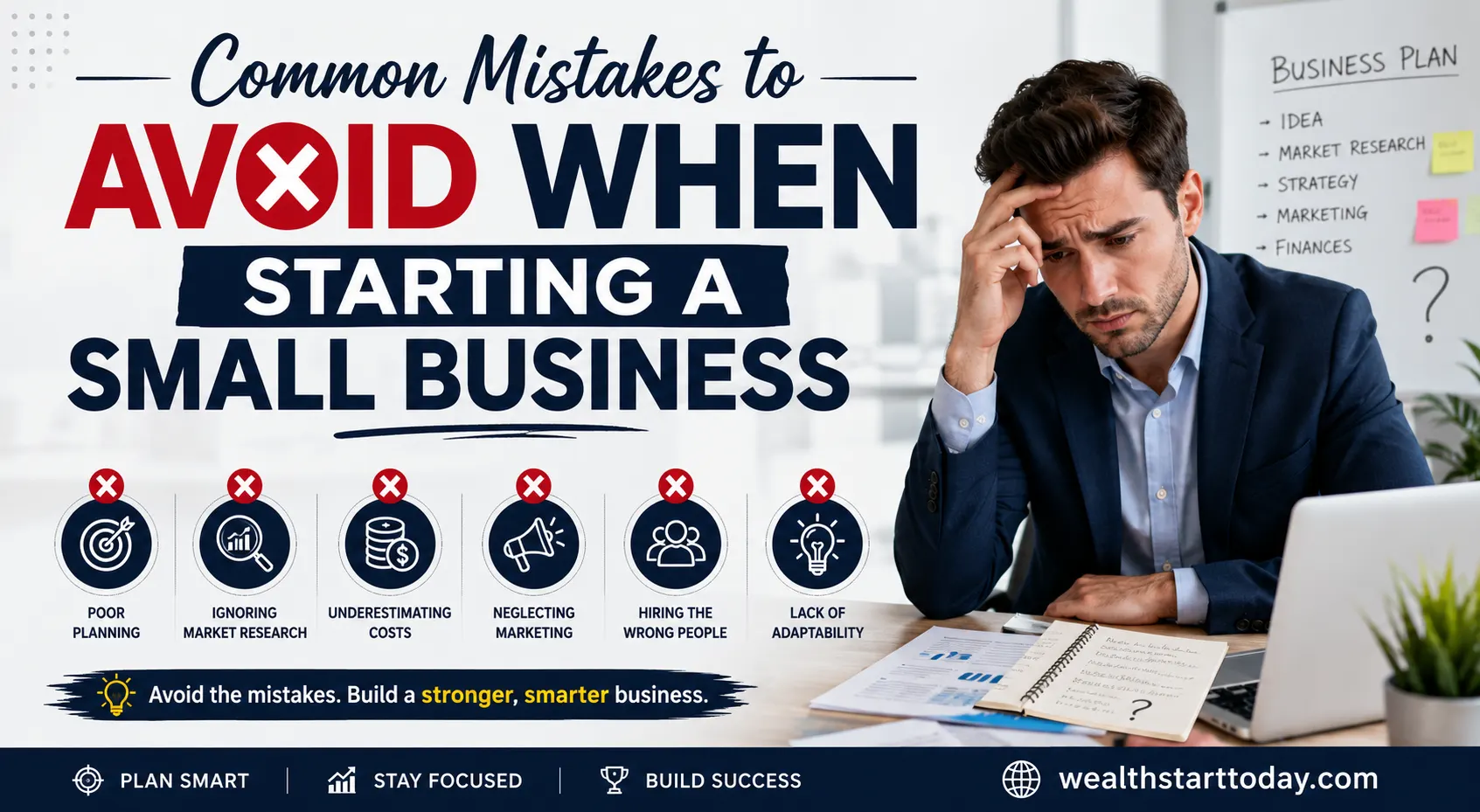
Even with a well-thought-out plan, many new business owners make mistakes that can be prevented. One of the most frequent errors is underpricing goods or services out of fear of rejection, which frequently results in burnout and unsustainable margins. Confusion and future tax issues result from failing to keep personal and corporate finances apart.
Marketing efficacy is weakened when one tries to satisfy everyone rather than a particular target demographic. In the digital-first economy of 2026, neglecting an online presence reduces visibility and growth potential. Another common cause of promising enterprises failing too soon is giving up too soon, before marketing efforts have a chance to compound.
A Note From Wealth Start Today
At Wealth Start Today, our mission is to help everyday people understand how to start small business ventures with clarity and confidence, without unnecessary jargon or unrealistic promises. We publish practical, research-backed guides across the Wealth Start Today’s Business category at wealthstarttoday.com, covering everything from startup funding to marketing strategy and long-term wealth building. If you’re serious about turning your idea into income in 2026, we encourage you to explore more articles on our site and stay connected with our growing community of entrepreneurs.
Frequently Asked Questions (FAQs)
- How much money do I need to start a small business in 2026?
It is possible to launch many small enterprises with less than $1,000, particularly those that are service-oriented or online. Depending on your sector, equipment requirements, and whether you need inventory, costs can vary significantly.
- What is the easiest type of small business to start?
Because they involve little initial investment and no physical inventory, service-based businesses like consulting, teaching, virtual assistance, and freelancing are typically the easiest to launch.
- Do I need a business license to start a small business?
Your industry and geography will determine this. While some industries, including food service or healthcare, have more stringent licensing requirements, many service-based and online firms only need a limited amount. Verify local laws at all times.
- How long does it take to start a small business?
Many entrepreneurs may legally register and start a basic small business in two to four weeks with careful planning, but it takes longer to develop a comprehensive brand and clientele.
- What is the best business structure for a first-time entrepreneur?
First-time business owners are frequently advised to use an LLC since it provides liability protection while being quite easy to establish and operate.
- How do I market a small business with a limited budget?
Prior to spending money on paid advertising, concentrate on organic tactics like email marketing, social media interaction, and SEO content. These strategies foster trust and long-term, sustainable traffic.
Conclusion
Understanding how to start small business ventures comes down to following a clear, repeatable procedure: evaluate your concept, make a strategic strategy, manage your financial and legal underpinnings, finance your launch, develop your brand, market consistently, and optimize using actual data. Entrepreneurs that take consistent, well-informed action are more likely to succeed in 2026 than those who have the most capital.
If you’re ready to take the next step, Wealth Start Today is here to help. Visit our Business category at wealthstarttoday.com for more in-depth guides, and don’t forget to follow us on Facebook and X.com to stay updated with the latest strategies for building real, lasting wealth through entrepreneurship.







1 Comment