



Effective money management is one of the most valuable life skills anyone can develop. With rising living costs, economic uncertainty, and increasing financial responsibilities, knowing how to budget your income has never been more important. Yet many people struggle to manage their money simply because they don’t have a clear and practical budgeting system.
One of the most popular and beginner-friendly budgeting methods is the 50 30 20 rule in budgeting. This simple approach divides your after-tax income into three categories: 50% for needs, 30% for wants, and 20% for savings or debt repayment. Instead of tracking every single expense, it provides a clear framework that helps you spend wisely while working toward your financial goals.
The biggest advantage of the 50 30 20 rule in budgeting is its simplicity. Rather than creating complicated spreadsheets or monitoring dozens of spending categories, you only need to focus on three easy percentages. This makes budgeting less stressful and easier to maintain over the long term while encouraging a healthy balance between essential expenses, lifestyle choices, and future savings.
The 50/30/20 budgeting framework was popularized by Elizabeth Warren and Amelia Warren Tyagi in their book All Your Worth: The Ultimate Lifetime Money Plan. Their approach focuses on creating a balanced financial plan that is realistic, flexible, and easy to follow. For many people, it serves as an excellent starting point for building healthier money habits and achieving long-term financial stability.
At Wealth Start Today, we believe that small, consistent financial decisions can have a lasting impact. Whether you’re creating your first budget, paying off debt, or building an emergency fund, understanding the 50 30 20 rule in budgeting can help you make smarter financial decisions and move closer to financial independence.
In this comprehensive guide, you’ll learn how the 50 30 20 rule in budgeting works, its key benefits and limitations, common mistakes to avoid, and practical tips to apply this budgeting method successfully in your everyday life.
Managing money is a challenge for many households. According to the Federal Reserve’s Report on the Economic Well-Being of U.S. Households, many adults would find it difficult to cover an unexpected emergency expense using cash or its equivalent. This highlights why having a simple budgeting system, such as the 50/30/20 rule, can help individuals prepare for both everyday expenses and financial emergencies.
What is the 50 30 20 Rule in Budgeting?
The 50 30 20 rule in budgeting is a financial guideline that helps people divide their after-tax income into three main categories.
These categories include:
- 50% for Needs
- 30% for Wants
- 20% for Savings and Debt Repayment
The 50/30/20 budgeting framework was popularized by Elizabeth Warren and Amelia Warren Tyagi in their book All Your Worth: The Ultimate Lifetime Money Plan. Their approach focuses on balancing essential expenses, personal spending, and savings instead of tracking every single purchase. This simple structure has made the rule one of the most widely recommended budgeting methods for beginners and individuals looking to build long-term financial stability.
This guideline aims to establish a balanced approach to financial management. The rule encourages people to maintain a good balance between necessary expenses, lifestyle enjoyment, and financial security rather than concentrating solely on saving or spending.
The 50/30/20 budgeting rule focuses on three simple spending categories instead of tracking every small expense. This makes budgeting much easier, especially for beginners. You can follow the plan without feeling stressed or overwhelmed by complicated financial planning. For a lot of people, this approach serves as the starting point for improving their financial discipline and creating a secure financial future.
Why the 50 30 20 Rule in Budgeting is So Popular
There are dozens of budgeting strategies available today, but the 50 30 20 rule in budgeting has gained widespread popularity for several important reasons.
Simple and Easy to Understand
One of the biggest reasons people choose the 50 30 20 rule in budgeting is its simplicity. Instead of tracking multiple spending categories, the method divides income into only three main sections.
This simplicity makes it accessible to beginners who may feel overwhelmed by complicated budgeting systems.
Balanced Financial Lifestyle
The rule allows individuals to enjoy life while still prioritizing financial responsibility. Unlike strict budgeting methods that focus only on cutting expenses, the 50 30 20 rule in budgeting encourages a balanced lifestyle.
People can still spend money on entertainment, hobbies, and travel while maintaining healthy savings habits.
Encourages Regular Savings
By allocating 20% of income toward savings and debt repayment, this method ensures that individuals consistently work toward long-term financial goals.
Regular savings contribute to building an emergency fund, retirement savings, and financial independence.
Promotes Financial Awareness
Following the 50 30 20 rule in budgeting helps individuals become more aware of their spending habits. Over time, this awareness leads to better financial decisions and improved money management skills.
How the 50 30 20 Rule in Budgeting Works
The first step in using the 50 30 20 rule in budgeting is to calculate your monthly after-tax income. This is the amount of money you take home after taxes and other deductions. Once you know your after-tax income, divide it into the three budget categories: 50% for needs, 30% for wants, and 20% for savings or debt repayment.
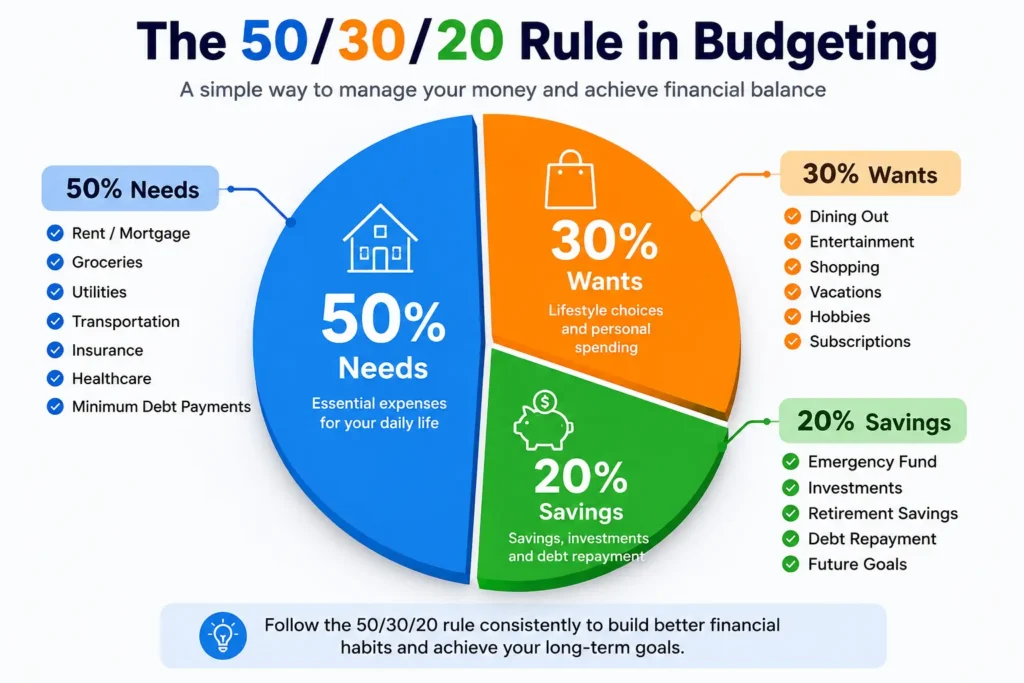
Before applying the 50/30/20 rule, calculate your monthly after-tax income, not your gross salary. This ensures your budget reflects the money you actually have available to spend and save. If your income varies from month to month, use your average monthly income from the past three to six months to create a more realistic budget.
Example
Monthly After-Tax Income = $4,000
| Category | Percentage | Monthly Amount |
| Needs | 50% | $2,000 |
| Wants | 30% | $1,200 |
| Savings | 20% | $800 |
This structure ensures that essential expenses are covered, lifestyle spending remains controlled, and financial goals continue to grow.
Over time, consistently following this budgeting strategy can significantly improve financial stability.
50 30 20 Rule in Budgeting: Understanding the 50% Needs Category
The 50% needs category includes all essential expenses required for basic living.
These are expenses that you must pay in order to maintain a stable lifestyle.
Examples of Needs
- Rent or mortgage payments
- Utility bills
- Groceries
- Health insurance
- Transportation
- Minimum credit card payments
- Basic clothing
The basic idea of the 50/30/20 budgeting rule is that your essential expenses should not be more than 50% of your income. If your essential expenses exceed 50% of your income, consider reducing housing or transportation costs where possible, cutting unnecessary expenses, or finding ways to increase your income. These adjustments can help you bring your budget back into balance. You will have enough money left over for savings and lifestyle expenses if you keep your needs within this range.
Here are some common examples of expenses that fall into the needs and wants categories.
| Needs (50%) | Wants (30%) |
| Rent or Mortgage | Dining Out |
| Groceries | Streaming Services |
| Utility Bills | Vacations |
| Health Insurance | Shopping |
| Transportation | Entertainment |
| Minimum Debt Payments | Hobbies |
50 30 20 Rule in Budgeting: Understanding the 30% Wants Category
The 30% wants category represents non-essential spending that enhances your lifestyle.
These are expenses that make life more enjoyable but are not required for survival.
Examples of Wants
- Dining out
- Streaming services
- Entertainment
- Travel
- Shopping
- Hobbies
- Gym memberships
The 50 30 20 rule in budgeting allows individuals to enjoy their income while maintaining responsible financial habits.
Limiting wants to 30% of income prevents overspending while still allowing room for personal enjoyment.
This balance helps people stay motivated to follow their budget long term.
50 30 20 Rule in Budgeting: Understanding the 20% Savings Category
The 20% savings category is the most important part of the 50 30 20 rule in budgeting because it focuses on long-term financial security.
This portion of income should be dedicated to building wealth and reducing debt.
Examples of Savings Goals
- Emergency fund
- Retirement savings
- Stock investments
- Index funds
- Real estate investments
- Paying off high-interest debt
- Education savings
Saving 20% of income consistently can lead to significant financial growth over time due to compound interest.
This is why financial experts often emphasize the importance of starting to save early.
If you’d like to learn more about saving money and building better financial habits, explore our Budgeting category for additional practical guides and tips.
Benefits of Using the 50 30 20 Rule in Budgeting
The 50/30/20 budgeting rule has many benefits and is an easy way to manage your money. It helps you divide your income into three simple categories: needs, wants, and savings. This clear and simple plan makes it easier to manage your finances and build better money habits. Many financial planners recommend starting with a simple budgeting system instead of creating dozens of spending categories. A budget that is easy to understand and maintain is more likely to become a long-term habit. The 50/30/20 rule works well because it provides flexibility while encouraging consistent saving and responsible spending.
Research from the Consumer Financial Protection Bureau (CFPB) shows that people who regularly track their income and spending are generally better prepared to handle unexpected expenses and achieve long-term financial goals. A simple budgeting framework like the 50/30/20 rule makes it easier to build these consistent financial habits.
Easy to Maintain
The 50/30/20 rule is easy to follow because it focuses on only three main spending categories. Unlike complicated budgeting methods, it is simple to understand and use. This makes it easier to manage your income and expenses on a regular basis.
Encourages Responsible Spending
This budgeting rule helps you spend money more wisely by limiting how much you spend on things you do not need. It encourages you to avoid unnecessary purchases, reduce wasteful spending, and focus on your most important financial goals.
Supports Long-Term Financial Goals
By saving 20% of your income, you can work toward your long-term financial goals. This money can be used for an emergency fund, education, retirement, or other important future expenses. It helps you stay prepared for unexpected events and plan for a more secure financial future.
Reduces Financial Stress
A simple budgeting plan helps you clearly understand your income and expenses. When you know where your money is going, you feel less stressed about money. It also gives you more confidence and helps you manage your financial responsibilities with peace of mind.
Limitations of the 50 30 20 Rule in Budgeting
The 50/30/20 rule works well for many people, but it is not the best choice for everyone. Everyone has different incomes, expenses, and financial situations. Because of this, some people may need to adjust the rule to match their own budget and financial goals.
High Cost of Living
Basic costs like rent, utilities, and transportation can be highly costly in high-cost locations. It might be challenging to adhere to the normal budgeting rule in situations where housing alone may account for more than 50% of income.
Irregular Income
Individuals with erratic income, such independent contractors or business owners, could find it difficult to stick to monthly budgeting percentages. According to the 50/30/20 rule, it may be more difficult for them to maintain consistent spending and saving behaviors if their wages fluctuate frequently.
Debt Burden
People who have a lot of debt might have to pay back more than 20% of their income. The amount of money available for savings or other expenses may be restricted by high debt obligations, necessitating a change in the budgeting approach.
Despite these challenges, the 50 30 20 rule in budgeting remains one of the best starting points for building better financial habits.
Who Should Use the 50 30 20 Rule in Budgeting?
| Person | Why the Rule Works |
| Beginners | Easy to understand and follow |
| Students | Helps control spending and save money |
| Young Professionals | Builds healthy financial habits early |
| Families | Organizes household expenses |
| Freelancers | Creates structure despite variable income |
| Retirees | Helps manage fixed monthly income |
The following examples show how different groups of people can benefit from the 50/30/20 budgeting rule.
The 50/30/20 budgeting rule is flexible enough to work for many different people. While it may need slight adjustments depending on your income or cost of living, it provides a strong foundation for building healthy financial habits.
Beginners
If you are new to budgeting, the 50/30/20 rule is an excellent place to start. Its simple percentage-based structure makes it easy to understand and follow without tracking every individual expense.
Young Professionals
People starting their careers can use this budgeting method to balance daily living expenses while building savings for emergencies, retirement, or future financial goals.
Families
Families can use the 50/30/20 rule to organize household expenses, manage monthly bills, and save for important goals such as education, vacations, or buying a home.
Freelancers and Self-Employed Individuals
Freelancers and business owners with variable income can also benefit from this rule by using their average monthly after-tax income as the basis for their budget. This approach helps create more consistent spending and saving habits despite income fluctuations.
Anyone Looking to Improve Money Management
Whether your goal is to reduce debt, build an emergency fund, or simply gain better control over your finances, the 50/30/20 rule offers a practical framework that can be adapted to suit your financial situation.
Tips to Successfully Follow the 50 30 20 Rule in Budgeting
To make this budgeting method work, you need to stay consistent and follow your plan. Try to avoid unnecessary spending and stick to your budget. By doing this regularly, you can manage your money better, reach your long-term financial goals, and build a more stable financial future.
Track Your Spending
Keeping meticulous records of your daily or monthly expenditures on various things is essential to tracking your spending. By doing this, you may better understand your spending patterns and pinpoint areas where you can cut costs to increase your savings.
Automate Savings
Setting up monthly automated transfers from your pay to a savings account is known as automating savings. This approach guarantees that a certain amount of money is consistently saved without forgetting, assisting you in achieving your financial objectives and creating a more secure financial future.
Reduce Unnecessary Costs
Spending less on luxuries, entertainment, and excessive shopping are examples of non-essential expenses. People can maintain a balanced budget and increase their savings for future financial stability by concentrating primarily on necessities.
Increase Income
When spending exceed expectations, raising income might assist improve financial balance. Small companies, freelancing, and part-time employment are ways for people to supplement their income. Increased income promotes better planning and savings as well as greater financial freedom.
Budgeting is not something you set once and forget. Review your budget at least once a month or whenever your income or major expenses change. If your housing costs increase or your salary changes, adjust your percentages accordingly. Consistently reviewing your budget helps you stay on track and ensures the 50/30/20 rule continues to support your financial goals.
Common Mistakes When Using the 50/30/20 Rule
Many people start using the 50/30/20 budgeting rule with good intentions but struggle to stick with it because of a few common mistakes. Recognizing these issues early can help you stay on track and make your budget more effective over the long term.
Confusing Needs with Wants
One of the biggest mistakes is treating non-essential expenses as necessities. For example, streaming subscriptions, premium phone plans, or frequent dining out are often categorized as needs when they are actually wants. Correctly separating these categories helps you follow the rule more accurately.
Using Gross Income Instead of After-Tax Income
The 50/30/20 rule is based on your after-tax income, not your total salary before taxes. Calculating your budget using gross income can lead to overspending and make it difficult to meet your savings goals.
Ignoring Emergency Savings
Some people focus only on paying monthly bills and overlook building an emergency fund. Setting aside part of your 20% savings allocation for unexpected expenses can help you avoid relying on credit cards or loans during financial emergencies.
Not Reviewing the Budget Regularly
Your income and expenses may change over time due to salary increases, inflation, or lifestyle changes. Reviewing your budget every month allows you to adjust your spending and savings percentages as needed and keeps your financial plan realistic.
Trying to Be Perfect
Many beginners give up after one month because they exceed their budget in one category. Instead of abandoning the plan, make small adjustments and continue improving. The goal is to build consistent financial habits, not achieve perfection from the very beginning.
The table below summarizes the most common budgeting mistakes and how to avoid them.
| Mistake | Solution |
| Using gross income | Use after-tax income |
| Treating wants as needs | Categorize expenses correctly |
| Skipping savings | Save at least 20% consistently |
| Never reviewing the budget | Review it every month |
Best Tools to Apply the 50 30 20 Rule in Budgeting
Financial planning can be made simpler by using budgeting tools.
Popular budgeting tools include:
- Spreadsheet budgeting templates – Ideal for creating and managing a custom monthly budget.
- Budgeting apps – Automatically track your income, expenses, and savings in one place.
- Expense tracking tools – Help you monitor your daily spending and identify areas where you can save money.
- Online financial calculators – Useful for estimating savings goals, loan payments, and investment growth.
Additional tactics are also covered in our earlier guide: How to save money on a tight budget.
This article outlines doable strategies for saving money even in situations where income is scarce.
External Financial Resources for Budgeting
To learn more about budgeting and personal finance, you can explore trusted resources such as Investopedia, NerdWallet, and the Consumer Financial Protection Bureau (CFPB). These websites provide expert guidance, practical budgeting tips, and educational resources to help you make informed financial decisions.
FAQs
What is the 50 30 20 rule in budgeting?
The 50 30 20 rule in budgeting is a simple financial guideline that divides income into three categories: 50% for needs, 30% for wants, and 20% for savings or debt repayment.
Who should use the 50 30 20 rule in budgeting?
Anyone who wants a simple and effective way to manage money can benefit from this budgeting strategy, especially beginners.
Can the 50 30 20 rule help reduce debt?
Yes. The 20% savings category can also include additional debt payments, helping individuals become debt-free faster.
Is the 50 30 20 rule good for beginners?
Yes. It is one of the easiest budgeting systems to understand and apply.
Can I adjust the percentages?
Yes. Some people modify the rule depending on their financial goals or cost of living.
How do I start using the 50 30 20 rule?
Calculate your monthly after-tax income and divide it according to the three categories.
Small financial habits can make a meaningful difference over time. Even setting aside a fixed percentage of your income each month can help you build an emergency fund, reduce debt, and work toward long-term financial security through consistent saving.
Conclusion
Managing your money doesn’t have to be complicated. The 50 30 20 rule in budgeting offers a simple and practical way to organize your finances without feeling overwhelmed. By dividing your after-tax income into 50% for needs, 30% for wants, and 20% for savings or debt repayment, you can create a budget that supports both your everyday expenses and your long-term financial goals.
Keep in mind that no budgeting method is perfect for everyone. If your income, expenses, or cost of living are different, you can adjust the percentages to fit your situation. The most important thing is to build consistent money habits and review your budget regularly as your financial needs change.
At Wealth Start Today, we believe that financial success starts with small, consistent actions. Whether you’re building an emergency fund, paying off debt, or saving for the future, the 50 30 20 rule in budgeting provides a strong foundation for making smarter financial decisions. Start with the basics, stay consistent, and remember that every step you take today brings you closer to long-term financial stability and freedom.












Leave a comment