


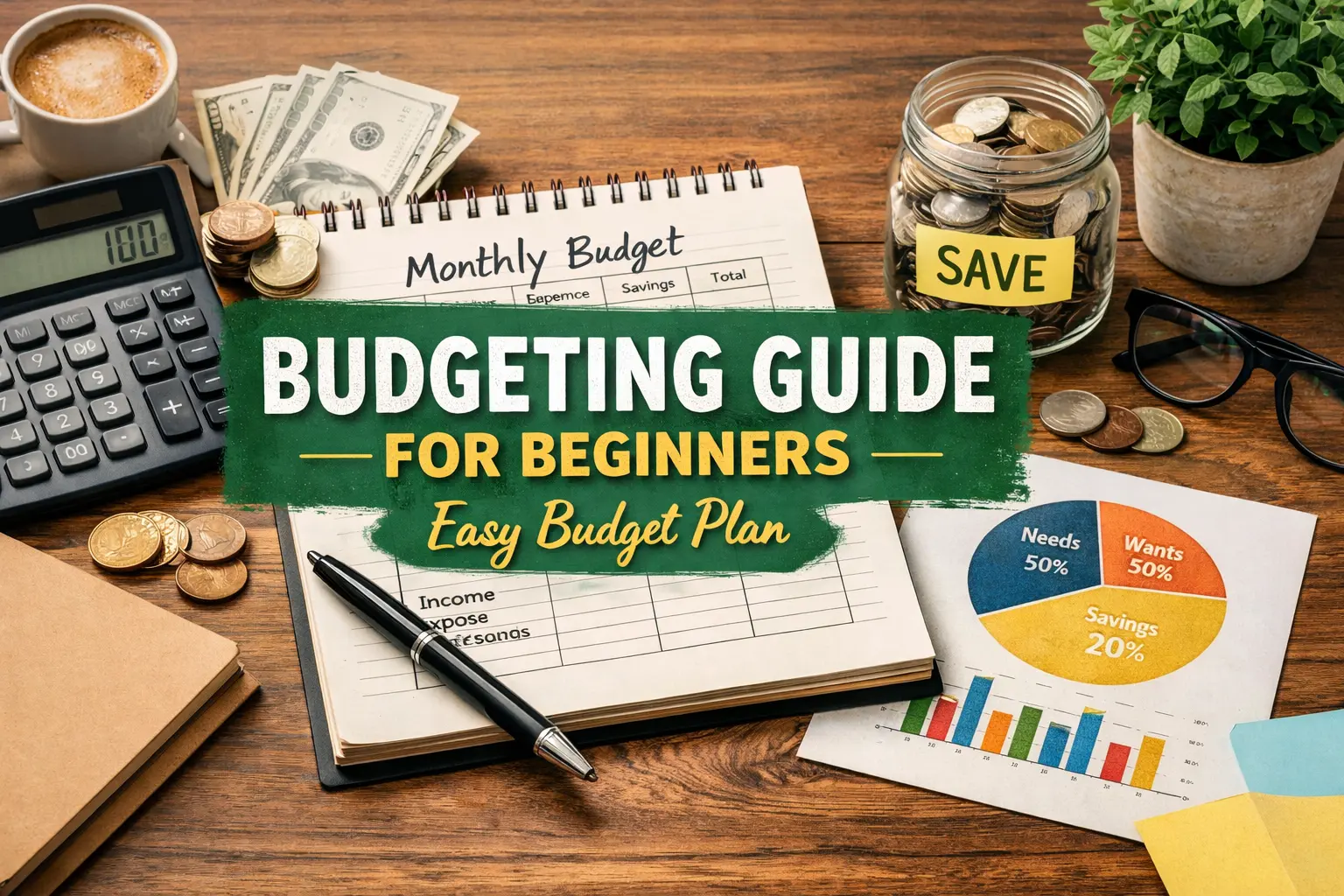
Starting a budget can feel overwhelming, especially when you are not sure where your money goes each month. Between everyday expenses, bills, debt payments, and savings goals, it can be difficult to know how much you should spend and how much you should save. A simple budgeting plan can help you take control of your money, avoid unnecessary spending, and make steady progress toward your financial goals.
This Budgeting Guide for Beginners will show you how to create a practical budget, track your expenses, separate needs from wants, build savings, and develop better money habits. Whether you are creating your first budget or trying to improve your current financial routine, these simple steps can help you manage your money with greater confidence.
You can also read our comprehensive guide for other money-saving tips: how to save money on a tight budget.
Why a Budget Is Important (Budgeting Guide for Beginners)
Prior to delving into methods, it’s critical to comprehend the significance of budgeting. A common misconception among novices is that budgeting is only important if you are having financial difficulties. In actuality, everyone benefits from budgeting.
Here are the main reasons why a budgeting guide for beginners is essential:
1. Helps You Understand Where Your Money Goes
A budget makes it easier for you to see how much money you spend each day. Small costs like coffee, subscriptions, or impulsive purchases are often overlooked. A budget tracks expenditures to identify trends and pinpoint spending.
2. Prevents Overspending
A budget gives you a clear idea of how much money you can spend. This knowledge enables you to manage your purchases and steer clear of wasteful expenditure. You make more cautious financial selections when you are aware of your boundaries.
3. Helps You Save Consistently
Setting aside money for savings on a regular basis is encouraged by budgeting. You plan your savings ahead of time rather than saving whatever is left over after spending. This practice helps you prepare for future demands and increase your financial security.
4. Reduces Financial Stress
In everyday life, financial uncertainty can be a major source of stress. Having a budget makes it easier to stay organized and manage your finances. You feel less anxious and more confident when you are aware of how your money is being spent.
5. Helps Achieve Financial Goals
Financial objectives can be transformed into practical strategies with the aid of budgeting. A budget enables you to manage your finances sensibly and make steady progress toward your objectives, whether they are debt repayment, home ownership, or emergency savings.
This is why every financial plan starts with a budgeting guide for beginners.
How to Create Your First Budget
Creating your first budget does not have to be complicated. The goal is to understand how much money comes in, where it goes, and how much you can set aside for savings and financial goals. Follow these simple steps to create a practical budget that you can maintain each month.
1. Calculate Your Total Monthly Income
Start by calculating your total monthly take-home income. Use your after-tax income because this is the amount you actually have available to spend and save.
Include all reliable sources of income, such as:
- Salary or wages
- Freelance income
- Side hustle earnings
- Investment income
- Government benefits
If your income changes from month to month, use an average based on your recent income rather than relying on your highest-earning month.
What Consumer.gov Recommends
Consumer.gov recommends starting a budget by listing your bills and other expenses, recording your monthly income, and subtracting your expenses from your income. It also recommends using your budget each month, tracking what you spend, and using that information to plan the following month’s budget.
This approach is particularly useful for beginners because it turns budgeting into an ongoing process rather than a one-time exercise.
2. Track All Your Expenses
Next, review your spending from the last two to three months. Check your bank statements, credit card transactions, bills, and cash purchases to understand where your money is going.
Group your expenses into categories such as:
- Housing
- Utilities
- Groceries
- Transportation
- Insurance
- Healthcare
- Debt payments
- Entertainment
- Subscriptions
- Dining out
Tracking your expenses gives you a realistic picture of your spending habits and helps you identify areas where you may be able to cut back.
3. Separate Needs From Wants
Once you have listed your expenses, separate essential costs from non-essential spending.
Needs are expenses you generally must pay, such as:
- Housing
- Food
- Utilities
- Transportation
- Healthcare
Wants are expenses that improve your lifestyle but are not essential, such as:
- Dining out
- Streaming services
- Shopping
- Vacations
- Entertainment
This step helps you decide where to reduce spending if your expenses are higher than your income.
4. Set Spending Limits for Each Category
Give each spending category a realistic monthly limit based on your income and financial priorities.
For example, if your monthly take-home income is $3,000, you might set limits for housing, groceries, transportation, entertainment, savings, and debt repayment.
Your limits do not have to be perfect from the beginning. Review your actual spending and adjust them as you learn more about your financial habits.
5. Prioritize Savings and Debt Repayment
Do not wait until the end of the month to see what is left for savings. Include savings and debt repayment as part of your budget from the beginning.
You might allocate money toward:
- An emergency fund
- Credit card debt
- Personal loans
- Retirement savings
- Other financial goals
Automating transfers to a savings account can make it easier to save consistently.
6. Monitor Your Budget Every Week
Creating a budget is only the first step. Check your spending at least once a week to see whether you are staying within your limits.
If you spend more than planned in one category, look for another category where you can reduce spending rather than abandoning your entire budget.
Remember that your budget is a flexible financial plan. Your income, expenses, and goals can change over time, so review and update your budget regularly.
Practical Budgeting Example for Beginners
Suppose you bring home $3,000 per month after taxes. After tracking your spending, you find that your essential expenses include $900 for housing, $300 for groceries, $200 for utilities, $200 for transportation, and $150 for insurance.
That leaves $1,250 for other priorities, including savings, debt payments, entertainment, dining out, and other personal expenses.
Instead of spending the remaining money without a plan, you can assign specific amounts to each category. For example, you might set aside $400 for savings, $300 for debt repayment, $250 for entertainment and dining, and $300 for miscellaneous or irregular expenses.
This example is only a starting point. Your budget should reflect your actual income, fixed expenses, debt obligations, and financial goals. The goal is to give every part of your income a purpose rather than following someone else’s budget exactly.
Budgeting Guide for Beginners: The 50/30/20 Rule
A straightforward budgeting technique that aids novices in efficiently managing their income is the 50/30/20 rule. Your monthly income is separated into three distinct groups. This technique facilitates budgeting by assisting individuals in striking a balance between long-term financial security, lifestyle expenditure, and necessary expenses.
50% Needs
This rule states that you should spend half of your income on necessities. Important living costs including rent, groceries, utilities, transportation, and insurance are among them. You have to cover these expenses in order to live a secure and comfortable life.
30% Wants
You can spend thirty percent of your salary on lifestyle decisions and personal desires. Entertainment, eating out, travel, hobbies, and other non-essential activities fall under this category. It enables you to have fun while yet being responsible and balanced financially.
20% Savings and Debt Repayment
You should set aside the remaining twenty percent of your income for debt reduction and savings. This amount can be used to pay off credit card debt and loans for long-term financial stability, invest for the future, or create an emergency fund.
50/30/20 Rule Example
Suppose you take home $3,000 per month after taxes. Under a basic 50/30/20 framework, you could allocate approximately $1,500 toward needs, $900 toward wants, and $600 toward savings and debt repayment.
For example, your $1,500 for needs could cover housing, groceries, utilities, transportation, and insurance. The $900 for wants could go toward dining out, entertainment, shopping, and other non-essential expenses. The remaining $600 could be divided between an emergency fund, retirement savings, and paying down debt.
This is only a starting point. Your actual percentages may need to be adjusted based on your income, housing costs, debt, family situation, and financial goals.
Why This Rule Works for Beginners
Because the 50/30/20 rule is straightforward and adaptable, many novices find it useful. It offers precise instructions on how to divide money without requiring complex computations. People can maintain constant financial discipline and improve their spending habits with the aid of this system.
See this budgeting technique for a more thorough explanation: 50 30 20 Rule in Budgeting.
What the CFPB Says About Budgeting
The Consumer Financial Protection Bureau (CFPB) uses the 50/30/20 rule as one example of a budgeting framework. The approach divides income into broad categories for needs, wants, and savings.
However, the 50/30/20 rule should be treated as a flexible framework rather than a requirement. Your percentages may need to change depending on your housing costs, debt, income, family situation, and financial goals.
Budget Chart Example for Beginners
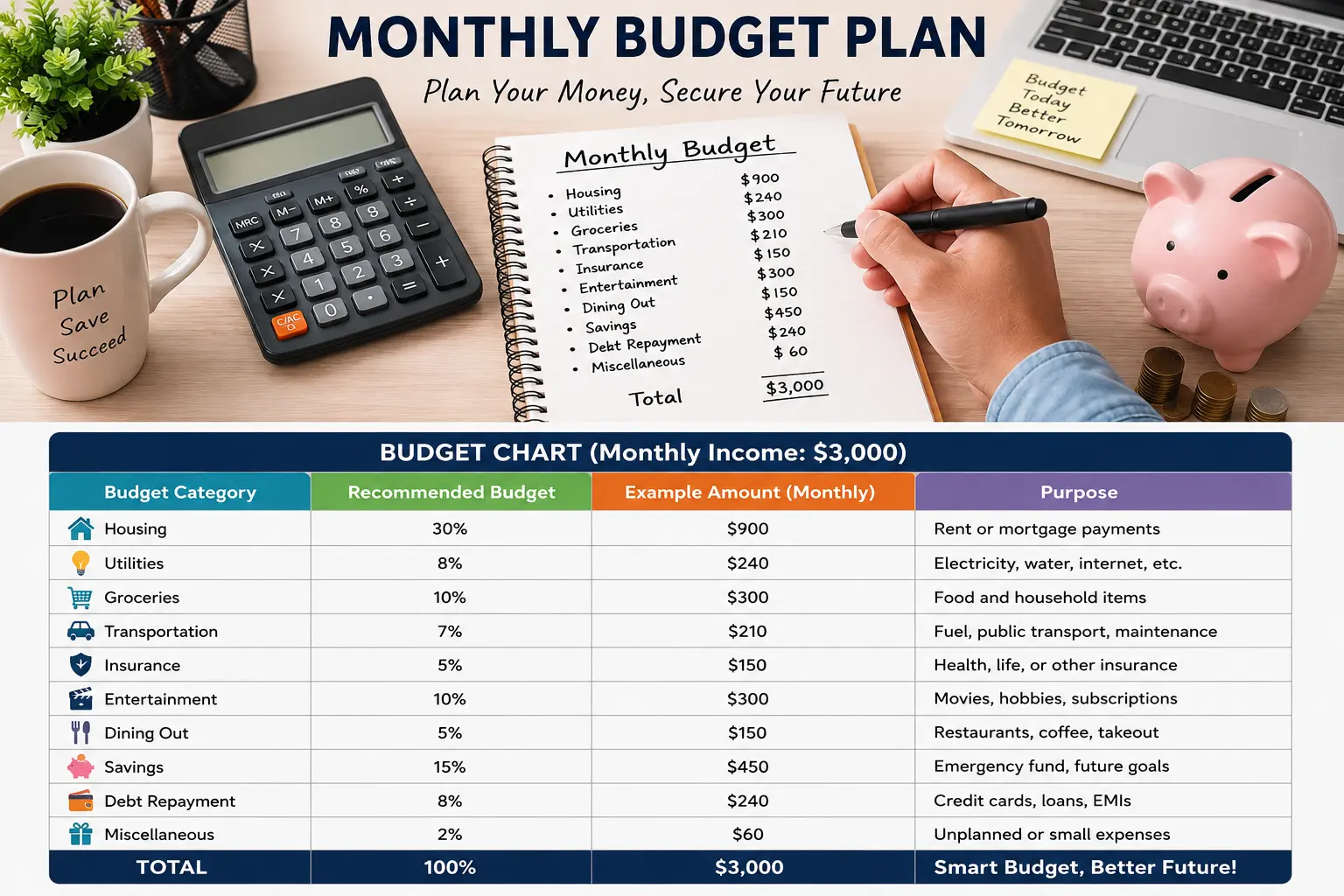
Example Monthly Budget Chart
| Budget Category | Recommended Budget | Example Amount (Monthly Income: $3,000) |
|---|---|---|
| Housing | 30% | $900 |
| Utilities | 8% | $240 |
| Groceries | 10% | $300 |
| Transportation | 7% | $210 |
| Insurance | 5% | $150 |
| Entertainment | 10% | $300 |
| Dining Out | 5% | $150 |
| Savings | 15% | $450 |
| Debt Repayment | 8% | $240 |
| Miscellaneous | 2% | $60 |
| Total | 100% | $3,000 |
This sample budget chart demonstrates how a beginner can allocate a monthly income of $3,000 across essential expenses, savings, debt repayment, and personal spending. Keep in mind that these percentages are only a starting point. Your ideal budget should reflect your income, cost of living, and financial goals. Reviewing and adjusting your budget regularly will help you stay on track and build stronger money management habits over time.
Why a Budgeted Income Statement Matters
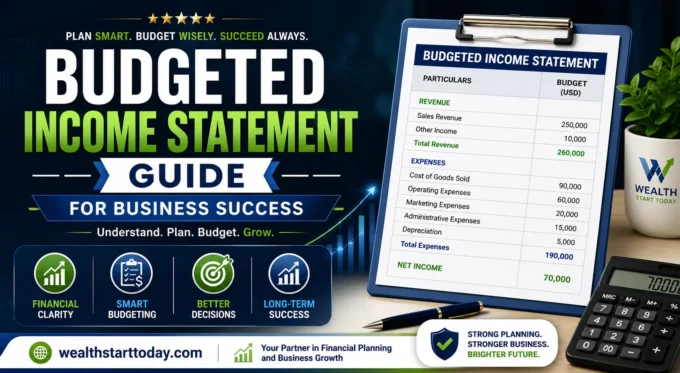
As your budgeting skills improve, you may also benefit from learning about a budgeted income statement. While a personal budget helps you manage your monthly income and expenses, a budgeted income statement provides a detailed forecast of expected income, expenses, and overall profitability over a specific period.
It is widely used by businesses, entrepreneurs, and even freelancers to estimate financial performance before actual results are available. Understanding this financial planning tool can help you make more informed decisions, set realistic financial goals, and monitor progress effectively. If you want to learn how it works and how to create one, read our detailed guide on budgeted income statement for a complete step-by-step explanation.
Simple Budgeting Methods
Different people prefer different budgeting systems.
Here are some popular methods.
Zero-Based Budgeting
Every dollar has a purpose.
Income – expenses = zero.
This method ensures that every dollar is accounted for.
Envelope Budget System
- Cash is placed into envelopes for different spending categories.
- Once the envelope is empty, you stop spending.
- This system works well for people who struggle with overspending.
Digital Budgeting Apps
Budgeting apps can make it easier to track spending, organize expenses, monitor savings, and stay within your monthly limits. They can be especially helpful for beginners who want a convenient way to manage their money.
Some budgeting tools you can consider include:
- YNAB (You Need a Budget): A zero-based budgeting app designed to help you give every dollar a specific job.
- Monarch Money: A personal finance platform that lets you track spending, budgets, accounts, and financial goals in one place.
- PocketGuard: Helps users monitor spending and see how much money may be available after accounting for bills, savings goals, and other expenses.
- EveryDollar: A budgeting tool based on zero-based budgeting that helps users plan where their income will go each month.
Before choosing an app, compare its features, pricing, account-syncing options, privacy practices, and budgeting method. The best tool is one that fits your financial situation and is simple enough for you to use consistently.
Tips to Stick to Your Budget
Many people make a budget with the best of intentions but find it difficult to stick to it on a daily basis. Effective budgeting requires consistency. You may retain long-term financial management and discipline by forming basic habits and routinely evaluating your financial strategy.
Here are practical tips.
Automate Your Savings
Maintaining consistency with your financial objectives can be achieved by automating your savings. Every month, you can program recurring transfers from your primary account to a savings account. This guarantees that saving becomes a habit without further work.
Use Cash for Problem Spending
Using cash can help you keep your spending under control if you frequently overspend on things like food, entertainment, or shopping. Paying with cash makes you more conscious of your spending, which inevitably promotes better money management.
Review Your Budget Monthly
Over time, your income, expenses, and financial priorities may shift. You may maintain awareness of your financial status by reviewing your budget each month. Frequent modifications guarantee that your budget stays practical, efficient, and in line with your present financial objectives.
Set Clear Financial Goals
Goals provide motivation.
Examples include:
- Building a $1,000 emergency fund
- Paying off credit card debt
- Saving for a vacation
- Investing for retirement
A strong budgeting guide for beginners always connects budgeting with goals.
What the FDIC Says About Financial Education
The FDIC’s Money Smart program provides financial education resources covering everyday topics such as spending, saving, borrowing, and money management. In an FDIC evaluation, users of the How Money Smart Are You? resources showed increases in reported budgeting and regular saving behaviors after using the program.
The takeaway for beginners is simple: budgeting is a skill that can improve with practice. Start with a manageable system, track your progress, and adjust your plan as your financial situation changes.
Common Budgeting Mistakes
Many novices make basic errors when they first start budgeting, which can lower the efficacy of their financial plan. You may make a more realistic budget and keep greater control over your spending habits by being aware of these typical mistakes.
Setting Unrealistic Limits
Making an excessively rigid budget can be challenging to stick to over time. You can become upset and give up on the plan if your spending limits are too high. A sensible budget should be flexible and balanced.
Forgetting Irregular Expenses
A lot of individuals overlook budgeting for sporadic expenses. Even while they might not happen every month, expenses like auto maintenance, medical bills, or yearly subscriptions still need to be planned for. By accounting for these erratic costs, you may avoid financial surprises and maintain the accuracy of your budget.
Not Tracking Small Purchases
Snacks, coffee, and fast internet transactions are examples of little daily purchases that might not seem like much. But over time, these little costs can mount up. You can better understand your spending patterns and handle your money by keeping track of every purchase you make.
Ignoring Savings
Treating savings as optional is a typical budgeting error. Savings should be planned as part of your budget rather than being saved from what’s left over after spending. Saving money on a regular basis helps you become financially secure and gets you ready for future expenses.
Budgeting Guide for Beginners: How to Save More Money
By providing individuals more control over their spending patterns, budgeting inevitably helps people save more money. It’s easy to cut back on wasteful spending and make better financial decisions every day when you know where your money is going.
Why Emergency Savings Matter
Having savings available for unexpected expenses can provide an important financial cushion. According to the Federal Reserve’s 2026 report on household financial well-being, 55% of adults said they had savings set aside to cover three months of expenses in an emergency in 2025. The report also found that 63% of adults said they could cover a hypothetical $400 emergency expense using cash, savings, or a credit card paid off at the next statement.
These figures show why building savings can be an important part of a household budget. Even if you cannot save a large amount immediately, including a manageable savings contribution in your budget can help you build a financial cushion over time.
Here are some practical strategies.
Reduce Unnecessary Subscriptions
Many consumers pay for memberships, streaming services, and applications that they hardly ever use. Examining and discontinuing these pointless services can result in monthly savings. Over time, this tiny action can greatly increase your total savings.
Plan Your Groceries
You can get only the items you truly need if you plan your meals ahead of time. As a result, there is less food waste and less needless shopping. A straightforward grocery plan can reduce your monthly food expenses and improve the efficiency of your shopping.
Avoid Impulse Purchases
Spending money on items you don’t really need is a common result of impulse shopping. Waiting 24 hours before making non-essential purchases is a useful tactic. You can utilize this time to reflect and determine whether the purchase is truly necessary.
Increase Your Income
You can save money more quickly and reach your financial objectives sooner if you increase your income. Freelancing, online jobs, and small enterprises are popular side gigs. Long-term financial stability is strengthened and financial flexibility is increased with additional revenue.
Benefits of Budgeting
Following a budgeting guide for beginners can transform your financial future.
Over time, budgeting can help you at the topic of budgeting guide for beginners:
- Build an emergency fund
- Eliminate debt
- Save for large purchases
- Invest for retirement
- Achieve financial independence
Budgeting is not just about managing money today — it is about building long-term wealth.
For more helpful budgeting resources, explore Wealth Start Today’s Budgeting category
FAQs
What is the best budgeting method for beginners?
There is no single budgeting method that works for everyone. Beginners can start with a simple approach such as the 50/30/20 rule, zero-based budgeting, or an envelope system. The best method is one that fits your income, expenses, financial goals, and spending habits.
How much should beginners save each month?
There is no fixed amount that every beginner should save. The right amount depends on your income, essential expenses, debt payments, and financial goals. If your budget is tight, starting with a small amount and increasing it over time can still help you build a consistent savings habit.
Is budgeting difficult for beginners?
Budgeting does not have to be difficult. Start by calculating your income, tracking your expenses, separating needs from wants, and setting realistic spending limits. You can gradually improve your budget as you become more familiar with your spending habits.
Should beginners use budgeting apps?
Budgeting apps can be helpful, but they are not required. An app may make it easier to track expenses, monitor spending, and organize financial goals. However, a spreadsheet, notebook, or simple budgeting template can work just as well if you use it consistently.
How often should I review my budget?
Reviewing your budget at least once a month can help you identify changes in income, expenses, and financial priorities. You can also check your spending weekly if you are just starting out or have difficulty staying within your limits.
What should I do if I spend more than my budget?
If you exceed your limit in one category, avoid giving up on the entire budget. Review where the extra spending occurred and look for areas where you can reduce expenses during the rest of the month. You can also adjust your future spending limits if your original budget was unrealistic.
Can I create a budget with irregular income?
Yes. If your income changes from month to month, base your budget on a conservative estimate of your expected income and prioritize essential expenses first. During higher-income months, you may be able to put more toward savings, debt repayment, or other financial goals.
What is the 50/30/20 budgeting rule?
The 50/30/20 rule is a simple budgeting framework that divides income into three broad categories: about 50% for needs, 30% for wants, and 20% for savings and debt repayment. These percentages are guidelines rather than strict requirements, so you can adjust them based on your financial situation.
Conclusion
Managing money is also a great skill. Spending without planning can lead to financial difficulties. When you manage your daily affairs in an orderly manner, it proves beneficial for you. Budgeting doesn’t limit your life, but it helps you make financially sound decisions. When you know where your money is going and where it’s going, you can not only avoid debt, but you can also spend with confidence and create a better future for yourself.
The essential steps are to estimate your income and based on that, set a limit for your expenses and prioritize maximum savings. This exercise will help you become financially strong, which will eliminate your daily worries. Remember, budgeting is a long-term habit.
As your income increases, your goals change, or your lifestyle changes. This can have an impact on your budget, but maintaining consistency is a great skill to have. If you’re thinking of starting out, start small. Create your budget this month. Track your expenses for the first week and start building up your savings slowly. You’ll see the difference over time.
By following this budgeting guide for beginners, You will acquire the skills and confidence need to handle your money and build a more secure financial future. And if you want to continue learning smart money strategies, explore more guides on Wealth Start Today and follow us on Facebook and X.com to stay updated with the latest insights. Creating a budget is an easy and simple step that will make you very financially strong.












4 Comments