
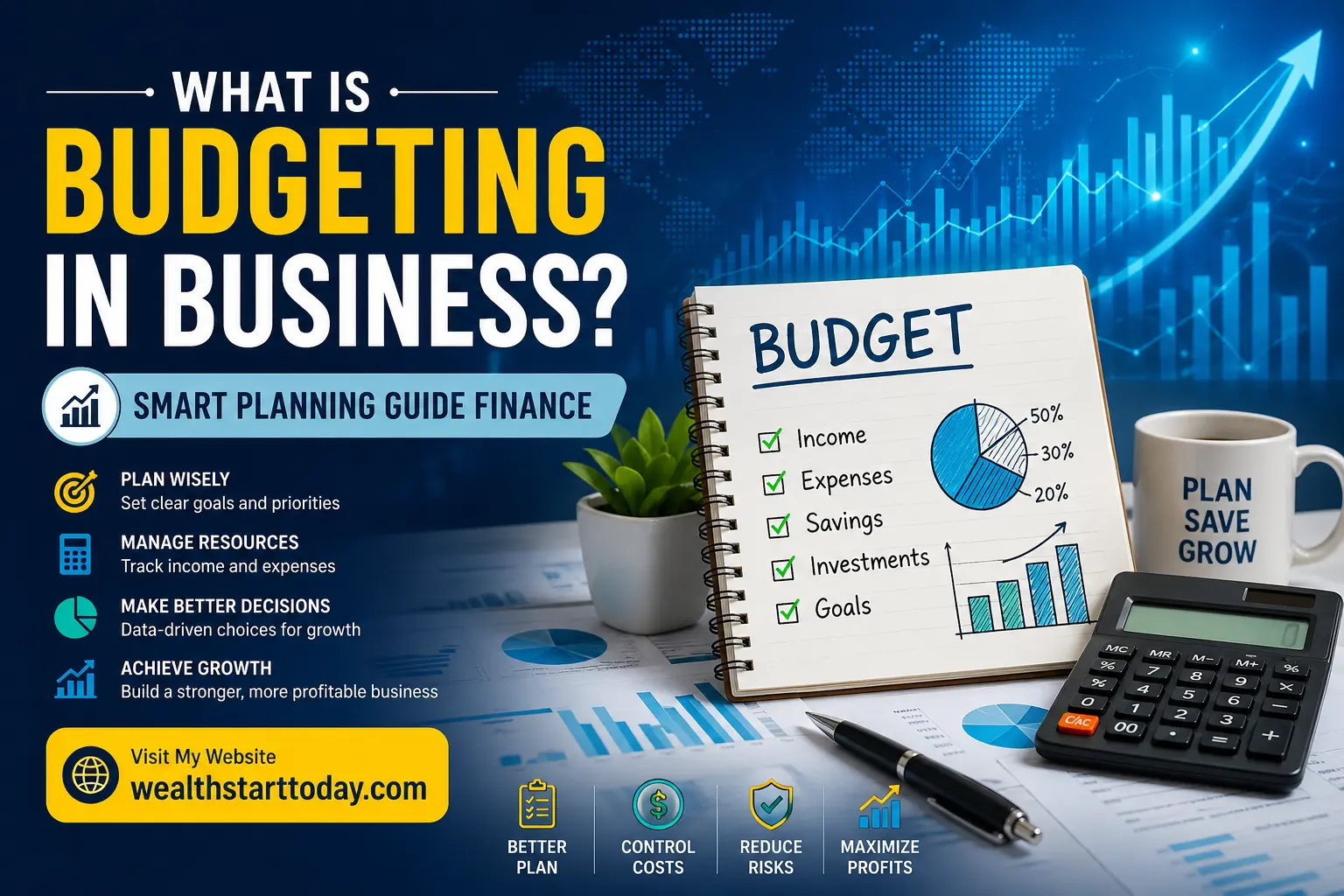
Understanding what is budgeting in business is one of the most critical skills any entrepreneur, manager, or financial professional can develop. Fundamentally, budgeting in business is the process of developing a thorough financial plan that details anticipated income, predicted costs, and the distribution of financial resources over a given time frame, usually monthly, quarterly, or annually.
Businesses of all sizes run the danger of overpaying, missing growth goals, or even going bankrupt without a sound budget. Whether you are managing the finances of a major corporation, a startup, or a small firm, understanding what is budgeting in business and how to use it successfully can be the difference between financial turmoil and sustainable growth.
We will go over all you need to know about what is budgeting in business in this extensive guide, from basic terminology to sophisticated tactics, so you can take charge of your money, make wiser plans, and succeed in the long run.
What Is Budgeting in Business? Core Definition and Meaning
The methodical financial planning process that businesses use to forecast and manage their revenue and expenses is known as budgeting in business. It acts as a financial road map that directs choices at all organizational levels.
There is more to a corporate budget than just a numerical spreadsheet. It is a financial representation of a company’s strategic goals. When you really understand what is budgeting in business, you realize that it is a single, cohesive financial document that links operations, strategy, and performance.
Why Budgeting in Business Is the Foundation of Financial Success
The importance of budgeting in business cannot be overstated. Every firm needs a well-structured budget for the following reasons:
- Financial Control: By keeping track of where your money is coming from and leaving, a budget helps you avoid needless spending.
- Goal Alignment: budgeting in business makes sure that all departments are working toward the same financial objectives.
- Performance Measurement: To find deviations and implement corrective measures, actual results can be compared to the budget.
- Risk Management: By setting aside reserves and contingency cash, budgets help firms prepare for unforeseen downturns.
- Investor Confidence: To lenders and investors, a well-managed budget conveys fiscal responsibility and credibility.
When you understand what is budgeting in business, you understand that building a financial foundation that enables wise judgments is more important than simply conserving money.
Types of Budgeting in Business You Must Know
Businesses employ a variety of budget categories, each of which has a distinct function. Gaining an understanding of these kinds is essential to mastering what is budgeting in business.
1. Operating Budget — The Heartbeat of Business Budgeting
The operating budget is the most common form of budgeting in business. It lists anticipated income as well as regular running costs for a specific time frame, such as salary, utilities, marketing, and supplies. It serves as a starting point for tracking operational effectiveness all year long.
2. Capital Budget — Planning for Long-Term Business Growth
Long-term investments like machinery, equipment, real estate, or technological advancements are the main focus of a capital budget. Understanding what is budgeting in business at this level entails realizing that capital budgeting uses techniques like Net Present Value (NPV) and Internal Rate of Return (IRR) to assist companies in determining whether significant investments are financially justified.
3. Cash Flow Budget — Managing Liquidity in Business Budgeting
Cash flow budgeting is a critical component of budgeting in business that monitors the timing of cash inflows and outflows. If a profitable company runs out of money, it can still fail. This kind of budget guarantees that the business can sustain liquidity and fulfill its immediate obligations.
4. Static vs. Flexible Budget — Choosing the Right Business Budget Model
A flexible budget adapts to real output levels, whereas a static budget stays the same regardless of changes in business activity. In the context of what is budgeting in business, for companies with variable costs or erratic revenue streams, flexible budgets are especially beneficial.
5. Master Budget — The Complete Picture of Business Budgeting
The operating, capital, and cash flow budgets are all combined into a single, complete document called the master budget. It represents the full financial vision of a company and is the ultimate expression of what is budgeting in business at the strategic level.
The Business Budgeting Process: Step-by-Step Guide
Now that you understand what is budgeting in business and the various types, Let’s examine how to construct one. The following steps are commonly included in the business budgeting process:
Step 1: Set Clear Business Financial Goals
Every budget begins with goals. Establish your company’s financial goals before making a budget, whether they are to increase revenue by 20%, cut expenses by 15%, or enter a new market. Clear goals are essential to budgeting in business because they provide direction for every financial decision.
Step 2: Review Past Financial Performance
Historical data is your most reliable starting point for budgeting in business. To find trends, seasonal patterns, and areas of overspending, examine the income statements, balance sheets, and cash flow reports from prior years. This phase ensures that your budget is based on facts rather than conjecture.
Step 3: Estimate Revenue for Your Business Budget
Revenue forecasting is one of the most challenging parts of what is budgeting in business. To predict realistic income figures, use market research, pipeline analysis, historical sales data, and current economic conditions. Be cautious; it’s better to underestimate and surpass goals than to overestimate and fail.
Step 4: Plan and Categorize Business Expenses
In your business budget, include a list of all anticipated expenses, including both variable (marketing, commissions, supplies) and fixed (rent, salary, insurance) prices. Accurately categorizing expenses is crucial to understanding what is budgeting in business in practice. Don’t forget to include contingency reserves for unexpected costs.
Step 5: Monitor, Track, and Adjust Your Business Budget
A budget needs to be actively monitored; it is not a one-time document. Compare your budget and real financial results on a regular basis. Examine the reasons behind any deviations and make necessary corrections. This ongoing process is the real power of budgeting in business, turning a static plan into a dynamic management tool.
Importance of Budgeting in Business for Every Organization
No matter the size or industry, the importance of budgeting in business applies universally. This is how it adds value to several facets of a business:
Budgeting in Business Drives Strategic Decision-Making
When leadership understands what is budgeting in business, they use the budget as a strategic compass. Every significant choice, including hiring, growing, investing, and cost-cutting, is assessed in relation to the financial plan. This keeps the company in line with its long-term goals and discourages rash decisions.
Business Budgeting Improves Departmental Accountability
One of the most powerful benefits of budgeting in business is accountability. Managers take on the role of stewards when each department is given a budget. They are driven to find funds, make prudent purchases, and openly disclose outcomes.
Budgeting in Business Supports Business Growth and Scaling
Resources are necessary for growth, and planning is necessary for resources. Understanding what is budgeting in business means knowing how to allocate capital to fuel expansion while maintaining financial stability. A strong budget is the cornerstone of scalable expansion, whether you’re adding employees, creating new locations, or introducing new goods.
How Wealth Start Today Helps You Master Budgeting in Business
If you are serious about mastering what is budgeting in business, you require a reliable source that provides knowledgeable, useful, and practical financial advice. That is exactly what Wealth Start Today provides. As a platform devoted to financial education, Wealth Start Today provides comprehensive articles, manuals, and resources created especially to assist people and business owners in navigating every facet of budgeting and financial planning. Wealth Start Today is your go-to source for reliable insights, practical tactics, and professional guidance that enables you to make wiser financial decisions and create long-lasting financial security, whether you are just beginning your financial journey or trying to maximize your current business budget.
You can also follow us on Facebook and X.com (formerly Twitter) for the latest budgeting tips, financial news, and exclusive content to help you grow your wealth.
Common Mistakes in Business Budgeting and How to Avoid Them
Even seasoned managers make mistakes when it comes to budgeting. Recognizing these pitfalls is an important part of understanding what is budgeting in business at a deeper level.
Mistake 1: Underestimating Business Expenses in the Budget
Many companies ignore hidden or irregular expenses in favor of concentrating primarily on visible costs. Budgeting in business necessitates keeping track of all expenses, including those related to software renewals, maintenance, compliance, and personnel turnover. In the middle of the year, underestimating spending might lead to major cash flow issues.
Mistake 2: Failing to Update the Business Budget Regularly
A once-made budget that is never reviewed is merely a wish list. Effective budgeting in business needs frequent evaluations, at least once a month, to account for changes in the market, unforeseen expenses, or changes in revenue. In dynamic corporate situations, static budgets quickly lose their significance.
Mistake 3: Ignoring Cash Flow in Business Budget Planning
Cash flow and profit are two different things. A common mistake in what is budgeting in business is focusing only on profitability while ignoring cash timing. If a company’s spending are front-loaded or client payments are delayed, it may appear profitable on paper yet have severe liquidity problems.
Best Practices for Effective Budgeting in Business
To truly excel at budgeting in business, adhere to these tried-and-true best practices suggested by financial experts:
- Use zero-based budgeting: Instead of modifying previous year’s numbers, start each budget period from scratch. This reduces needless legacy expenditures and promotes new ideas.
- Involve department heads: Since frontline managers are the most knowledgeable about their costs, collaborative budgeting fosters buy-in and yields more accurate estimates.
- Build in contingency reserves: 5–10% of the entire budget should always be set aside for unforeseen costs. This is a fundamental practice in smart budgeting in business.
- Use budgeting software: Tools like QuickBooks, Xero, or dedicated FP&A platforms streamline the entire business budgeting process and reduce errors.
- Align budget with KPIs: To ensure that every dollar spent is linked to quantifiable business outcomes, closely link budget allocations to key performance measures.
Explore More in the Budgeting Category at Wealth Start Today
Wealth Start Today Budgeting section This is your one-stop shop for financial planning information. It is packed with expert articles, practical guides, and proven strategies covering every dimension of budgeting in business and personal finance. From understanding the basics of what is budgeting in business to advanced financial modeling techniques, this category is designed for anyone who wants to take control of their money with confidence. The tools in our Budgeting category give you the clarity, structure, and practical insights you need to make every financial choice matter, whether you are in charge of a household budget or an enterprise-level financial plan. Visit our Budgeting category today to explore all the tools and knowledge at your disposal.
Related Content You Should Read on Wealth Start Today
If you found this guide on what is budgeting in business helpful, you will love the other expert articles we have already published to support your financial journey. Our guide on How to Save Money on a Tight Budget gives you practical, real-world tactics for reducing expenses and growing savings even when income is limited — perfect for entrepreneurs and individuals alike. The 50 30 20 Rule in Budgeting article breaks down one of the most popular and effective personal finance frameworks, showing you how to divide your income strategically between needs, wants, and savings. For those new to financial planning, our Budgeting Guide for Beginners provides a clear, step-by-step introduction to the fundamentals of budgeting in business and personal finance with no jargon and no confusion. And our in-depth article on Portfolio Budget Statement teaches you how to document and evaluate your investment allocations in a structured format that supports smarter portfolio decisions. Together, these resources form a comprehensive roadmap to financial mastery and they are all available at Wealth Start Today.
FAQs: What Is Budgeting in Business?
Q1: What is budgeting in business and why is it important?
Budgeting in business is the process of planning and controlling a company’s financial resources by estimating revenues and allocating expenses over a defined period. It is important because it provides financial direction, improves accountability, supports strategic decision-making, and helps businesses prepare for both opportunities and risks.
Q2: What are the main types of budgets used in business?
The main types of budgets in business budgeting include the operating budget, capital budget, cash flow budget, static budget, flexible budget, and master budget. Each type serves a different financial planning purpose and is used depending on the size and nature of the business.
Q3: How often should a business review its budget?
Best practice in budgeting in business recommends reviewing the budget at least monthly. High-growth businesses or those in volatile industries should review budgets weekly. Regular reviews allow managers to identify variances early and make timely adjustments to stay on financial track.
Q4: What is the difference between a business budget and a forecast?
A business budget is a fixed financial plan set at the beginning of a period based on goals and assumptions. A forecast, on the other hand, is a dynamic, updated projection of expected financial outcomes based on current data and trends. Both are essential tools in what is budgeting in business, but they serve different planning functions.
Q5: Can small businesses benefit from budgeting in business?
Absolutely. In fact, budgeting in business is even more critical for small businesses because they operate with tighter margins and fewer financial reserves. A solid budget helps small business owners control costs, prepare for growth, secure funding, and maintain cash flow stability — making it an indispensable tool regardless of company size.
Q6: What is zero-based budgeting in business?
Zero-based budgeting is a method of budgeting in business where every expense must be justified from scratch at the start of each budget period, rather than simply adjusting the previous year’s figures. It promotes fiscal discipline, eliminates wasteful spending, and encourages teams to think critically about resource allocation.
Conclusion: What Is Budgeting in Business?
Understanding what is budgeting in business is not just a financial skill. It’s a survival skill for businesses. Budgeting is the foundation of any financially sound company, from setting revenue goals to controlling expenses, managing cash flow, and planning for expansion.
In this guide, we covered the full scope of what is budgeting in business including types of budgets, the methodical budgeting process, typical blunders to steer clear of, best practices to apply, and the critical role that financial planning plays in the success of a business. The information presented here is intended to provide you with the theoretical knowledge and useful skills necessary to create and manage a strong business budget.
The path to financial mastery begins with a dedication to wise, consistent, and what is budgeting in business, regardless of whether you are a seasoned financial manager seeking to hone your abilities or a novice entrepreneur learning about budgeting in business for the first time.
Visit Wealth Start Today and peruse our expanding collection of financial resources for more professional advice, resources, and in-depth articles on everything related to budgeting and financial planning. Remember to follow us on X.com and Facebook to receive the most recent advice on how to increase your wealth, starting right now.











Leave a comment