



One of the main causes of stress in today’s households is money, and the quickest way to resolve it is to learn how to create a family budget that accurately represents your household’s lifestyle. Clarity is more important in a well-designed plan than limitations. Before the month even starts, it indicates where each dollar should go, so you won’t have to worry about where your paycheck went.
This article will walk you through the process of creating a family budget step-by-step using actual numbers and tactics that work in the 2026 economy, when interest rates, grocery prices, and childcare costs are all changing. This article will help you create a family budget that you can truly adhere to, regardless of whether you’re a single parent, a two-income home, or recently combined finances with a partner.
At Wealth Start Today, we believe budgeting should feel empowering, not overwhelming. This article lives in our Budgeting category, where we publish practical, no-fluff money guides designed for real families, not spreadsheets built for finance professionals.
What Is a Family Budget and Why It Matters in 2026
A family budget is a written or digital plan that shows how much money your household makes, spends, saves, and invests over a predetermined time frame, typically a month. In contrast to a personal budget, this type of plan takes into consideration shared costs such as rent, groceries, daycare, insurance, and family objectives like debt repayment, vacations, and education funds.
In 2026, the typical American household must contend with increased childcare expenses, grocery bills, and rent or mortgage payments that take up a bigger portion of their income than they did ten years ago. Clear household financial planning is more crucial than ever because many families are spending 30 to 35 percent of their income on housing alone, according to recent cost-of-living figures. Without one, expenditures can easily increase unchecked until there is nothing left before the next payment.
According to the U.S. Bureau of Labor Statistics, housing remains the largest expense for the average American household, accounting for approximately one-third of annual spending. This highlights why creating a realistic family budget is more important than ever.
This type of strategy is important because it
- allows each household member to see their shared finances.
- stops overpaying on unnecessary items
- accelerates the growth of an emergency fund
- Reduces financial disputes between partners
- makes it easier to achieve long-term objectives like retirement, education savings, and homeownership.
Step-by-Step: How to Create a Family Budget That Works
An accounting degree is not necessary to learn how to construct one. It calls for integrity, regularity, and a structure that works with the rhythm of your home. Here is a detailed structure that you may begin using right now.
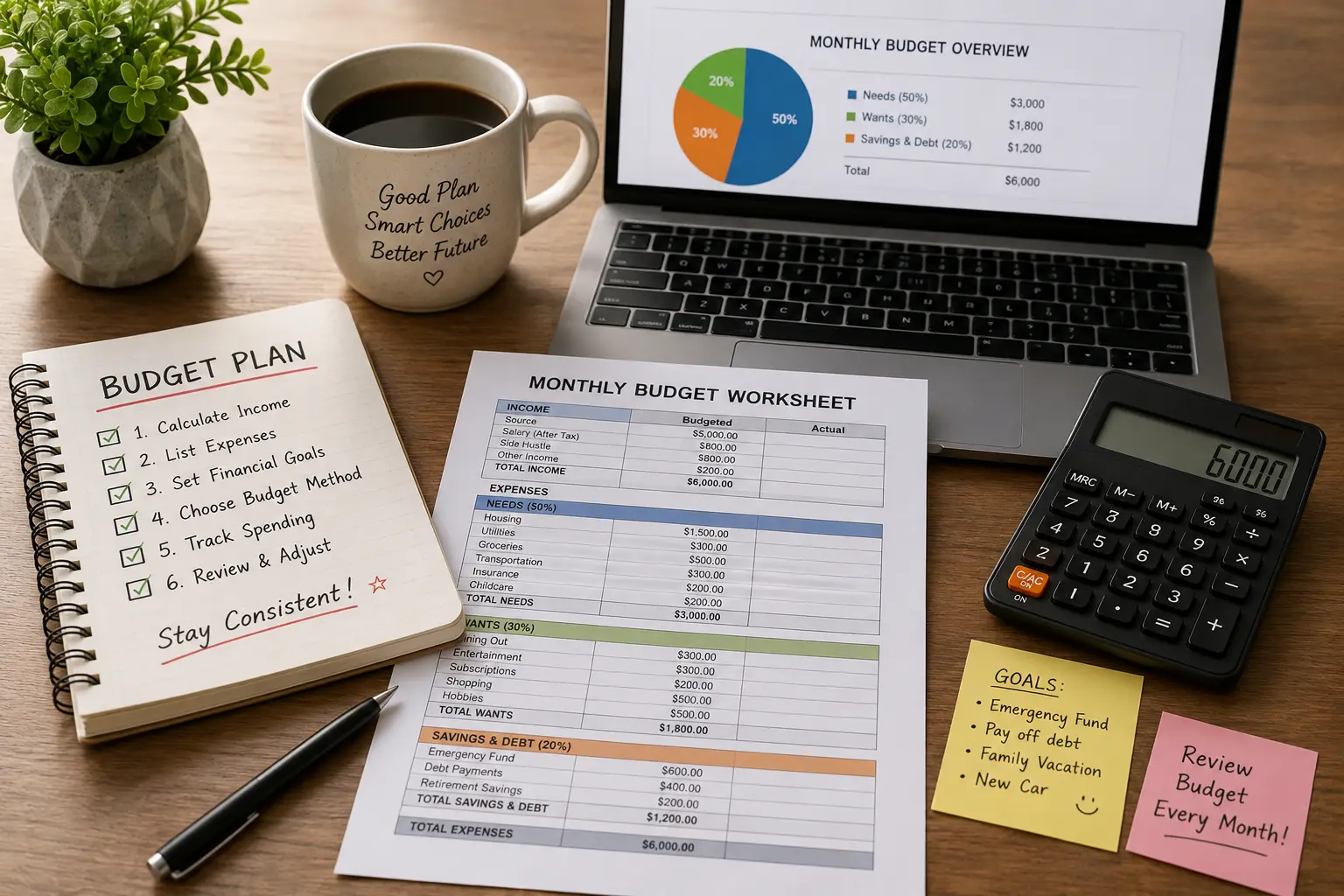
Step 1: Calculate Your Total Income for the Family Budget
You must have a clear idea of what is actually coming in before you can develop this approach. Add up all of the household’s sources of income, including benefits, child support, freelancing or side gig revenue, salary after taxes, and any regular passive income. Use the average of your last three months or base your budget on your lowest-earning month if your income varies from month to month.
Here, be exact. Many household budgets fail because the income estimate used to create the plan was overly optimistic from the beginning rather than because of excessive expenditure.
Step 2: List Fixed and Variable Expenses for Your Family Budget
Next, divide your spending into two groups:
Rent or mortgage, insurance, loan payments, subscriptions, and childcare costs are examples of fixed expenses.
Fuel, groceries, entertainment, clothes, eating out, and presents are examples of variable costs.
Examine the bank and credit card statements from the previous two to three months in order to record actual numbers rather than estimates. This is frequently the most enlightening stage in creating this strategy since it shows the precise locations where money is discreetly disappearing every month.
Step 3: Set Clear Financial Goals for Your Family Budget
Without objectives, a family budget is just a spreadsheet. Decide on two or three common objectives with your spouse or other family members, such as saving for a summer trip, paying off a credit card, or creating a three-month emergency fund. To give the plan direction rather than just numbers, give each target a monetary value and an approximate timeframe.
Step 4: Choose a Family Budget Method That Fits Your Lifestyle
There isn’t a single “correct” way to construct this plan; the ideal approach is the one your family will actually employ. For some categories, some families prefer literal cash envelopes; others prefer regulations based on percentages; still others like to give every dollar a job. In the following part, we’ll examine the best budgeting strategies for 2026.
Step 5: Track and Adjust Your Family Budget Monthly
This is a living plan, not a one-time paper. Every week or on your paycheck, schedule a 20-minute “money date” to compare your spending to your goal. As real-life events occur, such as a car repair, a birthday celebration, or an increase in rent, categories should be adjusted. Compared to families who make a plan once and forget about it, those who review it frequently are much more likely to stick with it over time.
Best Family Budget Methods to Try in 2026
Maintaining consistency is much simpler when the proper structure is chosen. These are the top three budgeting techniques for this year.
| Budget Method | Best For | Difficulty | Flexibility |
|---|---|---|---|
| 50/30/20 Rule | Beginners | Easy | High |
| Zero-Based Budget | Debt payoff | Medium | Medium |
| Envelope Method | Overspenders | Easy | Medium |
The 50/30/20 Rule
50% of after-tax income is allocated to needs, 30% to wants, and 20% to debt repayment or savings. For families who are new to budgeting, it is an excellent place to start because it is straightforward and adaptable. We go into much more detail about this technique in our special guide., 50 30 20 Rule in Budgeting, which breaks down exactly how to apply the percentages to a real household income.
Zero-Based Budgeting
Every dollar of revenue is allocated to a specific task with zero-based budgeting, such as bills, food, savings, or leisure funds, until income less expenses equals zero. Families that are trying to swiftly restore funds or pay off debt will find this strategy extremely helpful as it provides the strictest control over spending.
Envelope System
The envelope system allocates money (or its digital equivalent) to particular categories of expenditure, such as entertainment or food. Spending in that area ends for the month once an envelope is empty. This is used by many families in conjunction with a larger household budget to manage areas like eating out and impulsive shopping that are prone to overspending.
Sample Family Budget Breakdown by Income Level in 2026
This is easy to visualize using numbers. The 50/30/20 structure, modified for average 2026 expenses, is used in the simplified example below to demonstrate how the framework can adapt to varying household earnings. The 50/30/20 rule can be applied to various monthly after-tax household incomes, as demonstrated by this simplified budget calculator example. Start with it and modify the percentages according to your family’s real spending.
| Monthly After-Tax Income | Needs (50%) | Wants (30%) | Savings & Debt (20%) |
|---|---|---|---|
| $4,000 | $2,000 | $1,200 | $800 |
| $4,500 | $2,250 | $1,350 | $900 |
| $5,500 | $2,750 | $1,650 | $1,100 |
| $7,000 | $3,500 | $2,100 | $1,400 |
| $9,500 | $4,750 | $2,850 | $1,900 |
Household earning $4,500/month after tax:
- $2,250 for rent, utilities, groceries, insurance, and minimum debt payments (50%)
- Wants (30%): $1,350 for entertainment, hobbies, dining out, and subscriptions
- Savings/debt (20%): $900 for additional loan payments, retirement contributions, or the emergency fund
Household earning $7,000/month after tax:
- $3,500 is needed for housing, daycare, utilities, and insurance (50%).
- $2,100 for travel, dining, and lifestyle expenses (30%)
- Savings/debt (20%): $1,400 for investments, education savings, or expedited mortgage payments
Household earning $9,500/month after tax:
- Requirements (50%): $4,750 for two cars, a bigger mortgage, and private education
- Wants ($2,850) for more discretionary spending (30%)
- Savings/debt (20%): $1,900 for a second property fund, brokerage accounts, or retirement
These numbers are merely a first model. The actual split for each household will differ depending on where they reside, if daycare is involved, and the amount of debt they currently have. However, comparing actual statistics makes the planning process much less abstract.
Single-Income vs. Dual-Income Households: Adjusting Your Family Budget
The strategy should take into account the fact that different households make money in different ways. Since there isn’t a second salary to fall back on in the event that hours are reduced or a job is lost, fixed costs in a single-income household usually need to stay well below 50% of take-home pay to provide room for a safety cushion. In this case, saving three to six months’ worth of costs becomes even more important.
Couples who live in dual-income families occasionally fall victim to “lifestyle creep,” which occurs when spending increases to equal two salaries rather than utilizing the additional income to accelerate debt repayment or savings. Living mostly off one partner’s income and allocating the majority or all of the second’s income to savings, investments, or aggressive debt repayment is one sensible strategy used by many households in 2026. Regardless of how your property is set up, reviewing the plan every few months guarantees that it still reflects your actual income, not the figures from the previous year.
Common Mistakes to Avoid When Creating a Family Budget
A few preventable errors can cause even a well-meaning budget to collapse:
- Being overly rigorous too quickly—cutting all discretionary spending at once typically results in burnout and budget abandonment within weeks.
- Forgetting unforeseen expenses: Back-to-school bills, holiday shopping, and yearly insurance premiums are frequently overlooked, which throws the plan off later.
- A budget created by one partner alone is likely to encounter opposition and have less follow-through when the entire household is not involved.
- Ignoring the emergency fund: Without a cash reserve, a single unforeseen expense might reverse months of work.
- Never evaluating the plan: A plan that isn’t reviewed on a monthly basis soon becomes unrealistic and out of date.
If you’re currently working with a very limited income, our guide on How to Save Money on a Tight Budget pairs well with this article and offers practical ways to free up cash before you finalize your budget categories.
Tools and Apps to Simplify Your Family Budget in 2026
This type of plan is much simpler to create and maintain thanks to technology. In 2026, the majority of households utilize a combination of shared spreadsheets for families that desire complete manual control, specialized budgeting applications that sync across partners’ phones, and banking apps with integrated budgeting tools. Instead of depending on one person to handle everything, look for technologies that enable shared access so that both partners may monitor and amend the plan in real time.
The objective is the same regardless of the tool you select: make it simple to check your budget every day without opening ten different accounts or apps. While some households feel that manually recording expenses once a day improves spending awareness, others prefer automated programs that classify transactions quickly. As long as the habit is maintained, there is no right or wrong answer. A straightforward paper ledger or printed monthly template can function just as well if technology tends to be more of a distraction than an aid; the consistency of the instrument is far more important.
Common Categories Every Family Budget Should Include
This process doesn’t feel daunting when you have a helpful checklist. In 2026, the majority of households classify their expenditures into one of the following categories:
- Housing: home insurance, property taxes, rent or a mortgage, and HOA dues
- Plans for utilities include phone, internet, gas, water, and electricity.
- Food, cleaning supplies, and toiletries are examples of groceries and household items.
- Transportation: auto payments, fuel, public transportation, insurance, and upkeep
- Childcare and education: extracurricular activities, school supplies, tuition, and daycare
- Healthcare and insurance: life insurance, out-of-pocket medical expenses, and health premiums
- Paying off debt, including credit cards, student loans, and personal loans
- Investments and savings: retirement accounts, emergency funds, and brokerage contributions
- Spending on hobbies, leisure, eating out, and subscriptions
- Presents and sporadic costs, such as birthdays, holidays, and yearly memberships
Not every household will require all ten categories, and some will require extra ones, such as business expenses, pet care, or alimony. The objective isn’t a perfect list; rather, it’s a structure that is both easy to follow month after month and sufficiently precise to ensure that no significant expense is overlooked.
Regional Cost Differences to Keep in Mind
Your numbers will vary greatly depending on where you reside, and it can be deceptive to compare your household to the national average. The conventional 50% “needs” rule may not be practical for every place in 2026 because housing expenses in large metropolitan areas can be two to three times greater than in smaller cities or rural areas. While households in more cheap areas could have more space to accelerate savings, households in higher cost-of-living areas frequently need to alter the percentages, spending closer to 60–65% on essentials and reducing the “wants” category.
Use your own actual spending as a foundation and modify the % parameters to suit your own city, state, or region instead of forcing your statistics to match a national average. Instead of depending solely on national averages, you can set more precise goals by taking a short look at local rent ads or using a regional cost-of-living calculator.
Consumer prices have remained significantly higher than pre-2020 levels according to the U.S. Bureau of Labor Statistics Consumer Price Index (CPI), making location-based budgeting more important for today’s families.
How to Involve Your Kids and Partner in the Family Budget
When adults don’t keep their common spending plan a secret, it works best. Establish a regular check-in time for partners and handle the budget as a team effort rather than a single person’s job. Financial disagreements are frequent, but having a written plan provides both parties with an objective point of reference rather than depending on recollection or conjecture.

Involving older kids in age-appropriate aspects of the plan, such as grocery shopping or a family vacation savings goal, promotes financial literacy at a young age and lessens conflict when it comes to allowances or spending demands. If you’re unfamiliar with household budgeting, our foundational piece, Budgeting Guide for Beginners, is a great companion piece that explains core budgeting concepts before diving into family-specific strategies.
How a Family Budget Helps You Save for Emergencies
A fully funded emergency fund is one of the most beneficial results of a well-managed household budget. In 2026, financial advisers often advise setting aside three to six months’ worth of necessities in an easily accessible savings account. Instead of hoping for leftover funds at the end of each month, this type of strategy makes it feasible by identifying precisely how much may be realistically shifted toward savings each month. Families with a specific emergency line item in their plan recover from unforeseen costs—such as auto repairs, medical bills, and job loss—much more quickly than those without one.
The Consumer Financial Protection Bureau (CFPB) recommends building emergency savings to help households cover unexpected expenses without relying on high-interest debt. Even small, regular contributions can strengthen long-term financial stability.
A Real Household Example
In 2026, a two-income household with one child would earn $6,200 per month after taxes. About $3,400 was spent on rent, utilities, and childcare, which is far more than the recommended 50%. Instead of freaking out, the household separated actual fixed costs from flexible ones using the framework in this guide and found that $310 a month was being spent on useless subscriptions and a seldom used gym membership. A $200 monthly automatic transfer into an emergency fund was made possible by rerouting that sum and reducing the shopping expense with straightforward meal planning. The household saved more over $1,600 in just eight months without making any significant lifestyle adjustments. Small, regular changes rather than drastic cuts are what a realistic, well-reviewed strategy makes achievable.
Why You Can Trust This Family Budget Guide
This article combines current 2026 cost-of-living trends published by major financial and housing data sources with popular personal finance models, such as the 50/30/20 rule and zero-based budgeting. Nothing here offers a one-size-fits-all solution or unattainable outcomes. Since every household has varied numbers, responsibilities, and objectives, the aforementioned procedures are meant to be modified rather than strictly adhered to.
Readers can count on Wealth Start Today’s budgeting information to be realistic and based on actual household finances rather than general advice because it is published and updated on a regular basis to reflect current economic realities. Research consistently shows that households that regularly track their spending are more likely to stay within their budget and achieve their financial goals than those who do not monitor their finances.
Related Resources on WealthStartToday
If this guide helped you get started, explore more budgeting resources from Wealth Start Today in our Budgeting category. You may also find these related articles useful as you continue building your family’s financial plan:
- How to Save Money on a Tight Budget — practical tactics for households with limited income
- Budgeting Guide for Beginners — the fundamentals every new budgeter should know
- 50/30/20 Rule in Budgeting — a simple percentage-based method to structure your plan
FAQs
- How much should a family budget allocate to savings each month?
The majority of financial standards recommend setting aside at least 20% of a household’s after-tax income; however, households that are paying off debt or establishing an emergency fund may begin with a smaller percentage and gradually grow it.
- What’s the easiest way to start a family budget?
Start by figuring out the entire household income, making a list of all fixed and variable expenses from the previous two to three months, and then organizing spending using a straightforward framework like the 50/30/20 rule.
- How often should we update our family budget?
Every week, review your plan for fast check-ins. Every month, especially after payday, undertake a thorough evaluation to make necessary adjustments to categories based on actual spending and future expenses.
- Should both partners be involved in the family budget?
Indeed. When all parties have visibility and input, this type of strategy is much more successful and long-lasting because it fosters shared accountability and minimizes misunderstandings.
- What’s the biggest reason family budgets fail?
The most frequent cause is being unrealistic from the beginning, either by underestimating costs or making excessive budget cuts, which causes the plan to be abandoned within a few months.
Conclusion
One of the most important financial skills that every household can develop in 2026 is how to create a family budget. A clear, honest, and routinely reviewed family budget gives your home the framework it needs to lower stress, stay out of debt, and gradually progress toward common goals, but it won’t solve every financial issue immediately. Start small, include everyone who will be impacted by the plan, and review it frequently. Your plan should change as your life does.
In the first month, progress seldom appears significant. It appears to be a little more breathing room before the next paycheck arrives, one fewer financial debate, and a slightly fuller savings account. Maintain consistency, adapt to changing conditions, and approach the process as a continuous habit rather than a one-time event.
For more practical, real-world guides like this one, explore the wealth start today’s budgeting category.
You can also follow us on Facebook and X.com for daily budgeting tips, family finance updates, and new articles from Wealth Start Today as soon as they’re published.













Leave a comment