
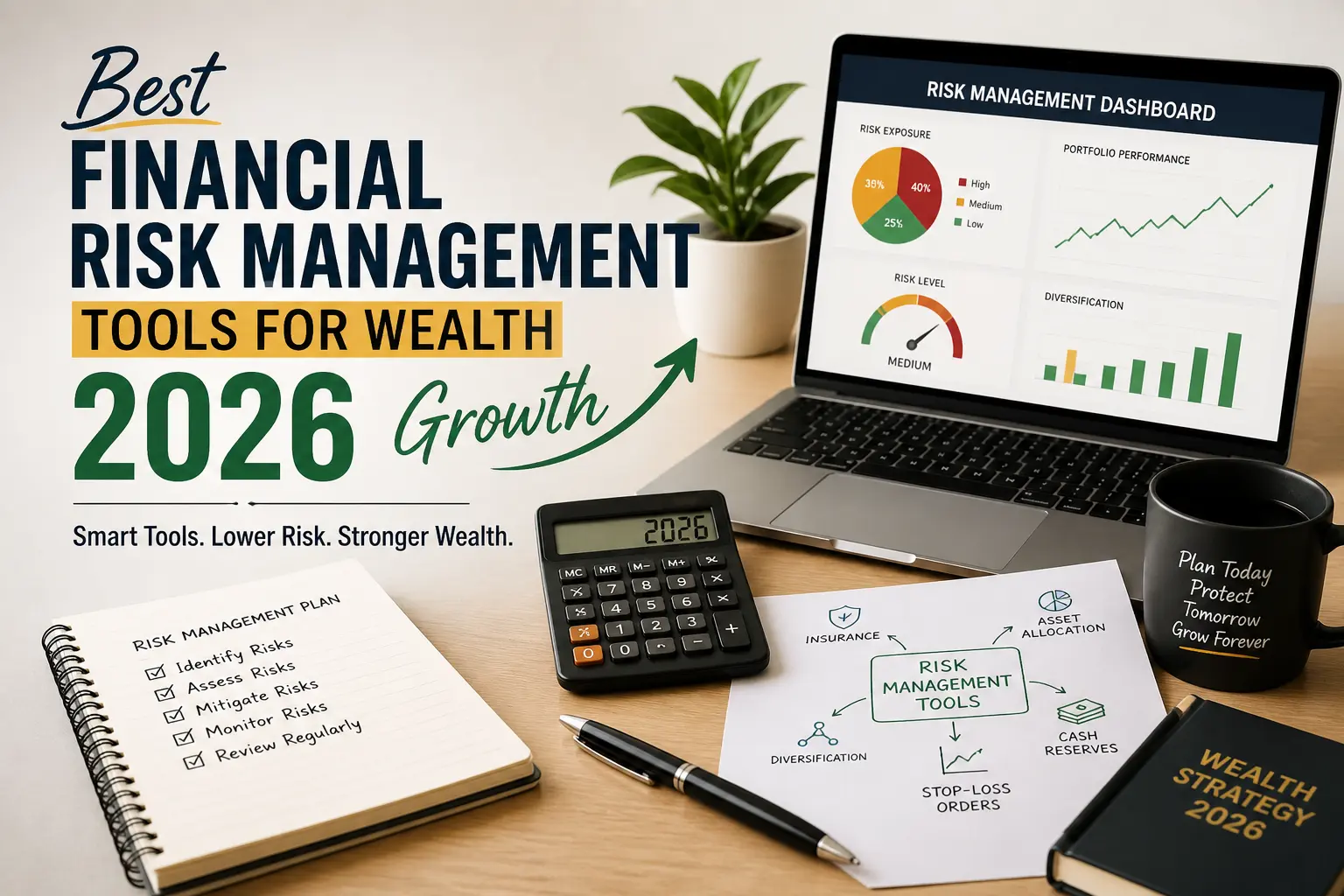
Understanding and controlling risk is now essential in today’s quickly changing financial environment. Having the appropriate financial risk management tools in your toolbox can make the difference between prospering and suffering catastrophic financial losses, regardless of whether you are a corporate finance professional, small business owner, or individual investor. With the help of these tools, you can assess exposure levels, spot any hazards, and put good plans into action to protect your financial future. The ecosystem of financial risk management tools has expanded significantly, offering solutions for all skill levels and business sizes, from portfolio risk analysers to enterprise-grade risk assessment platforms.
We’ll examine the best financial risk management solutions on the market today, describe how they operate, and assist you in selecting the best one for your particular requirements in this in-depth guide.
What Are Financial Risk Management Tools?
Financial risk management tools are digital tools, software platforms, and analytical frameworks created to assist people, companies, and financial institutions in recognising, evaluating, tracking, and reducing different kinds of financial risk. These technologies offer organised approaches to handling uncertainties that may have a detrimental effect on financial performance. They range from straightforward spreadsheet-based models to complex AI-powered systems capable of instantly processing millions of data points.
Why Financial Risk Management Tools Are Essential in 2026
In 2026, the world financial landscape is more intricate and linked than it has ever been. Financial risk can appear suddenly and quickly due to a variety of factors, including geopolitical concerns, inflationary pressures, rising interest rates, cryptocurrency volatility, and regulatory changes.
By offering early warning signals, scenario simulations, and data-driven insights that facilitate quicker and more intelligent decision-making, effective financial risk management systems assist users in staying ahead of these dangers. Inadequate financial risk management can result in regulatory fines, bankruptcy, or a decline in investor trust. Ignoring risk can undermine hard-earned wealth for individual investors in a matter of months.
Types of Financial Risks Managed by Financial Risk Management Tools
Market Risk and How Financial Risk Management Tools Address It
The possibility of losses as a result of shifts in market prices for stocks, bonds, commodities, and currencies is known as market risk. Value at Risk (VaR) assessments, scenario analysis, stress testing, and real-time price monitoring are some of the ways that financial risk management tools address market risk. It is common practice to estimate how various market scenarios will impact an investment portfolio using platforms such as FactSet, Riskalyze, and Bloomberg Terminal. Portfolio managers can rebalance their holdings to keep under acceptable risk levels with the aid of these tools, which quantify exposure.
Credit Risk Analysis with Financial Risk Management Tools
The chance that a borrower may not fulfil their financial commitments is known as credit risk. Exposure at default (EAD) calculators, probability of default (PD) models, and credit rating systems are examples of advanced financial risk management instruments for credit risk. To produce extremely accurate credit risk assessments, platforms like Moody’s Analytics, S&P Risk Solutions, and Experian Business Credit use machine learning and historical financial data. For banks, lenders, and corporate treasury departments that need to assess counterparty risk prior to entering into lending or trading arrangements, these tools are essential.
Liquidity Risk Management with Specialized Tools
When a company is unable to pay its short-term debts without suffering intolerable losses, liquidity risk results. Cash flow forecasting software, liquidity coverage ratio (LCR) calculators, and intraday liquidity monitoring dashboards are examples of specifically designed financial risk management instruments for liquidity. Strong liquidity risk modules from treasury management systems like Kyriba and FIS provide CFOs and treasurers with a real-time view of their cash holdings across several accounts and currencies, allowing them to take prompt action when liquidity shortages are about to occur.
Operational Risk Tools Within Financial Risk Management
Operational risk includes losses stemming from external events like fraud or cyberattacks as well as internal failures in systems, people, or procedures. Internal audit software, incident recording systems, and governance, risk, and compliance (GRC) platforms are examples of financial risk management technologies that address operational risk. Organisations may document, evaluate, and address operational risks before they become significant financial losses by using tools like MetricStream, ServiceNow Risk, and RSA Archer.
Top Financial Risk Management Tools to Use in 2026
Bloomberg Terminal: The Gold Standard of Financial Risk Management Tools
For professional investors, analysts, and financial institutions, Bloomberg Terminal continues to be one of the most complete tools for managing financial risk. It provides news feeds, real-time market data, sophisticated analytics, and a range of risk assessment modules covering anything from fixed income length risk to stock volatility. Users can run factor-based risk models, carry out attribution analysis, and stress test their portfolios against past occurrences like the 2008 financial crisis or the 2020 COVID-19 market crash using the terminal’s PORT feature (Portfolio and Risk Analytics). Despite being a high-end solution mainly intended for institutional customers, Bloomberg Terminal’s extensive feature set makes it an indispensable resource for serious financial risk specialists.
Riskalyze: Financial Risk Management Tools for Advisors and Investors
For both ordinary investors and financial advisors, Riskalyze has become one of the easiest financial risk management tools to use. It is simple to match investment portfolios with real risk appetite because of its own Risk Number technique, which measures a client’s risk tolerance on a scale of 1 to 99. Additionally, the platform provides clients with easy-to-share portfolio risk summaries, Monte Carlo simulations, and stress testing. Riskalyze is a great option for wealth management companies that wish to effectively explain risk ideas without overwhelming non-professional investors because of its user-friendly interface and client-friendly visualisations.
Oracle Financial Services Analytical Applications (OFSAA)
Large banks and other financial organisations can use Oracle OFSAA, an enterprise-grade suite of financial risk management solutions. It encompasses a wide range of risk disciplines, such as Basel III compliance, profitability management, funds transfer pricing (FTP), and asset-liability management (ALM). A holistic perspective of enterprise-wide financial risk is provided by the platform’s integrated data model, which guarantees that risk data moves smoothly between various modules. OFSAA is an excellent option that satisfies the intricate requirements of contemporary banking for companies that need both regulatory compliance and risk management capacity.
IBM OpenPages: Governance and Financial Risk Management Tools Combined
IBM OpenPages is a top platform for governance, risk, and compliance that offers businesses in a variety of sectors a complete financial risk management solution. It combines financial controls management, internal audit, operational risk, and regulatory compliance into one AI-powered platform. OpenPages helps risk teams find new dangers that might not be immediately apparent through conventional research by using IBM Watson AI to extract insights from unstructured data. It is a very scalable solution for businesses of all sizes because to its adaptable workflows, risk libraries, and automated reporting features.
Quantifi: Financial Risk Management Tools for Fixed Income and Derivatives
One of the most effective financial risk management tools for businesses working with fixed income securities, credit derivatives, and structured products is Quantifi, which specialises in risk analytics and portfolio management solutions. To meet the unique requirements of hedge funds, asset managers, and sell-side institutions, the platform offers complex pricing models, real-time risk measures, and regulatory reporting capabilities. For specialised risk use cases, Quantifi leads the industry thanks to its strong counterparty credit risk management module and its capacity to handle complicated financial instruments.
How to Choose the Right Financial Risk Management Tools for Your Needs
Assessing Your Financial Risk Management Tools Requirements
The first step in choosing the best financial risk management tools is to fully comprehend your unique risk environment. You should consider the kinds of risks to which you are most vulnerable, the size and complexity of your financial activities, and the technical proficiency of your staff. While major financial institutions need fully customised, enterprise-level systems with regulatory compliance features, small firms and individual investors may discover that lightweight SaaS-based products are ideal for their needs. Establishing your needs in advance guarantees that the tool you select will provide true value, saves time, and lowers expenses.
Integration Capabilities of Financial Risk Management Tools
The smooth integration of financial risk management systems with your current technological stack is one of the most crucial aspects to consider. Data from a variety of sources, including market data feeds, accounting systems, CRM platforms, and compliance databases, are necessary for effective risk management. Strong API connectivity, pre-built integrations with well-known financial data sources, and compatibility with cloud platforms like AWS, Microsoft Azure, and Google Cloud are features of the finest products. Inadequate integration skills might result in data silos that compromise your risk analysis’s quality and cause expensive blind spots.
Cost and ROI of Financial Risk Management Tools
Financial risk management tools range widely in price, from business platforms that cost hundreds of thousands of dollars annually to free open-source alternatives. When assessing cost, it’s critical to take into account the entire cost of ownership, which includes implementation, training, customisation, and continuing support, in addition to the subscription or licensing charge. Effective risk management’s return on investment must also be taken into account. The whole cost of a risk management platform can frequently be recovered many times over from a single risk event that is avoided, such as a market crash loss, a credit default, or a compliance punishment.
How Wealth Start Today Supports Your Financial Risk Management Journey
Our goal at Wealth Start Today is to make high-quality financial information and resources more accessible so that everyone, from novice investors to seasoned pros, can make wise financial decisions. The most recent and efficient financial risk management tools available are covered in-depth in our Financial Tools area, which is updated frequently with evaluations, comparisons, and guidelines.
We provide you with frank, useful views based on actual financial knowledge by cutting through the clutter of marketing claims and technical jargon. Wealth Start Today is your reliable partner on that path, whether you want to manage business financial risks, safeguard your investment portfolio, or just learn how risk management operates. To remain up to date on the most recent reviews of financial tools, market information, and wealth-building techniques from our knowledgeable staff, you can also follow us on Facebook and X.com (previously Twitter).
Key Features to Look for in Financial Risk Management Tools
Real-Time Monitoring in Financial Risk Management Tools
The best financial risk management systems have real-time monitoring features that let users keep tabs on risk exposures as market conditions shift. Live data feeds, automated alarms, and real-time dashboards are essential components that allow prompt reactions to new risks. When the market is moving quickly and every minute matters, tools that rely on delayed or batch-processed data may expose consumers.
Scenario Analysis and Stress Testing Capabilities
Among the most potent features provided by sophisticated financial risk management technologies are scenario analysis and stress testing. With the use of these tools, users can assess how their portfolio or company’s finances might fare in hypothetical market scenarios, such as a 30% loss in the equities market, an abrupt increase in interest rates, or a geopolitical crisis. The outcomes of stress tests give decision-makers useful information that enables them to modify their risk positions proactively rather than reactively.
Regulatory Compliance Modules in Financial Risk Management Tools
Any financial risk management tool must have compliance features for companies in regulated industries. Leading platforms have integrated support for significant regulatory frameworks like Dodd-Frank, Basel III/IV, Solvency II, and IFRS 9. Regulatory capital calculations, audit trails, and automated compliance reporting lessen the human workload for compliance teams and lower the possibility of regulatory infractions that could result in harsh fines.
Free and Open-Source Financial Risk Management Tools Worth Exploring
Fortunately, there are great free and open-source alternatives that offer surprisingly deep functionality because not every firm has the funds for expensive financial risk management systems. Market risk, credit risk, and concentration risk analysis are all supported by the open-source OpenRisk framework for quantitative risk management. A well-known open-source library for quantitative finance, QuantLib offers resources for financial instrument pricing, hedging, and risk analysis.
Despite not being a specialised risk management tool, R and Python have large ecosystems of libraries, such QuantPy, PyPortfolioOpt, and FinancePy, that allow complex risk modelling at no cost. Academics, quantitative researchers, and fintech businesses that require strong analytics without a large initial expenditure are especially fond of these free financial risk management solutions. .
Financial Risk Management Tools for Small Businesses and Entrepreneurs
The financial risk management tools that small business owners must take into account the distinct financial hazards that they frequently encounter, which are very different from those of huge organisations. Among the most frequent risks that small firms face are cash flow risk, revenue concentration risk, and credit risk from suppliers and customers. For small and medium-sized businesses (SMEs), tools like Float, Pulse, and Dryrun provide scenario planning and cash flow forecasting. For entrepreneurs that require straightforward, actionable risk insights without the complexity of enterprise solutions, QuickBooks and Xero, despite being primarily accounting systems, offer cash flow reports and financial health indicators that function as entry-level financial risk management tools.
About the Financial Tools Category
Wealth Start Today’s Financial Tools category is a specialised resource center designed to educate people and companies about the best digital tools in the financial industry. This category includes a broad range of financial technology products, from sophisticated risk analysis platforms and data management systems to budgeting apps and investment trackers.
In order to ensure that readers can comprehend not only what a tool does but also how to apply it meaningfully in their real-world financial journey, each item in this category is meticulously researched and written with an emphasis on practical value. The Financial Tools category offers the insights, comparisons, and professional advice you need to make confident and well-informed decisions, regardless of whether you are just starting your wealth-building journey or trying to maximise an existing financial strategy.
Building on Previous Insights: From Financial Data Extraction Tool
It is important to acknowledge the basis that our earlier content has already set before delving into financial risk management solutions. A crucial initial step in any risk management process, our article on financial risk management tools examined how companies and investors may effectively extract, arrange, and analyse raw financial data from various sources. No risk instrument can perform at its best without clear, precise data.
In a similar vein, our article on financial data extraction tool emphasised how a company’s credit ratings, investor confidence, and financial stability are all directly impacted by public perception and brand trustworthiness. These two fields—reputation monitoring and data extraction—combine to create crucial cornerstones of an all-encompassing financial risk management tool Knowing how these components work together makes it easier to understand why reliable financial risk management systems need to incorporate reputational intelligence and accurate data in addition to more conventional indicators like credit exposure, liquidity, and volatility.
Frequently Asked Questions About Financial Risk Management Tools
Q1: What are the best financial risk management tools for individual investors?
The finest financial risk management tools for individual investors include Morningstar Direct (for investment research and risk ratings), Personal Capital (for portfolio tracking and risk analysis), and Riskalyze (for risk tolerance assessment). Without the need for expert financial expertise, these systems provide user-friendly interfaces and practical information.
Q2: Are there free financial risk management tools available?
Indeed, there are a number of great free financial risk management tools available, such as QuantLib, OpenRisk, and Python-based libraries like FinancePy and PyPortfolioOpt. Technically proficient users who require customisable risk modelling capabilities without having to pay license costs may find these especially useful.
Q3: How do financial risk management tools help with regulatory compliance?
Regulatory compliance modules that automate capital calculations, produce regulatory reports, and keep audit trails in line with frameworks like Basel III, IFRS 9, and Solvency II are integrated into enterprise financial risk management tools like Oracle OFSAA, IBM OpenPages, and Moody’s Analytics. These characteristics lower the likelihood of regulatory violations and drastically lower compliance costs.
Q4: Can small businesses use financial risk management tools effectively?
Of course. Small and medium-sized firms are the target audience for many financial risk management products. While tools like Experian Business Credit and Nav assist small business owners in evaluating and tracking credit risk, platforms like Float, Dryrun, and Pulse provide cash flow risk management. A small business can be shielded from liquidity crises by using risk-relevant financial data provided by even basic accounting software like QuickBooks. .
Q5: What is the difference between risk management tools and financial planning tools?
Financial risk management tools are especially made to recognise, quantify, and lessen the risks that could undermine those plans, whereas financial planning tools concentrate on goal-setting, budgeting, and predicting future wealth. The two kinds of instruments work well together; risk management safeguards the path, while financial planning establishes the course.
Q6: How often should I review my financial risk management tools and strategies?
At least once per quarter, or anytime there are notable shifts in the market, your financial situation, or the regulatory landscape, you should examine your financial risk management tools and related tactics. In addition to formal quarterly risk evaluations, several experts advise ongoing monitoring using automated dashboards.
Conclusion: Embrace Financial Risk Management Tools to Secure Your Financial Future
In a world where financial volatility is now the norm rather than the exception, the significance of financial risk management tools cannot be emphasised. The appropriate financial risk management tools can change your strategy from reactive to proactive, from vulnerable to resilient, whether you are a financial institution navigating complicated regulatory requirements, a small business owner managing cash flow uncertainty, or an individual investor looking to safeguard a retirement portfolio. The tools discussed in this article, which range from Oracle OFSAA and open-source equivalents to Bloomberg Terminal and Riskalyze, are some of the best options currently on the market, each with special advantages for certain risk management requirements and financial constraints.
In the end, developing a risk-aware attitude that incorporates technology, data, expertise, and ongoing learning is more important for successful financial risk management than simply utilising the best tools. By fusing Wealth Start’s expertise and insights with potent financial risk management technologies You are giving yourself all the tools you need today to confidently and clearly handle financial unpredictability. For further wealth-building materials, tool evaluations, and expert recommendations, see our Financial Tools category. To stay up to date on our most recent findings and never miss an update that could have a beneficial impact on your financial future, follow us on Facebook and X.com.












Leave a comment